



Behind every cup of coffee are people whose work deserves recognition and fair reward. All too often, smallholder coffee farmers struggle to secure a fair share of the value they help create. Inclusive purchasing practices offer a way forward: actors further downstream in the supply chain can predistribute or redistribute value through the way they buy coffee.
That is why we are excited to launch “Rethinking procurement models in the coffee sector: recommendations for more inclusive business models”. In this publication, we explore what inclusive purchasing looks like in practice, and how it can contribute to a more equitable coffee sector for everyone involved.
“Long-term sustainability and economic viability should go hand in hand, and that is the only way forward for future-proof business models.”
Liesbeth Van Meulder
Expert Sustainable Cocoa and Coffee | Rikolto
In the publication, we assessed the extent to which the business models we support in our sustainable coffee programme in Africa, Southeast Asia and Latin America align with the principles of inclusivity and equity as referenced in with reference to CIAT’s LINK methodology, the Coffee Barometer, SCA’s Equitable Value Distribution paper, and VOCAL’s Responsible Procurement Practices paper.
We particularly looked at how a range of practices, such as pricing and contracts, risk sharing, and practices that support coffee production, access to finance, women, youth, joint innovation, transparency and accountability, contribute to addressing existing inequalities in the coffee sector.
Besides identifying insights that help us refine our own strategies, we have also identified high-potential best practices for private sector companies, support organisations and government actors to enhance their efforts to foster more inclusive and equitable business models.

We invite you to browse the publication and take a deeper dive with us into the various elements that make up good purchasing practices in the coffee sector.
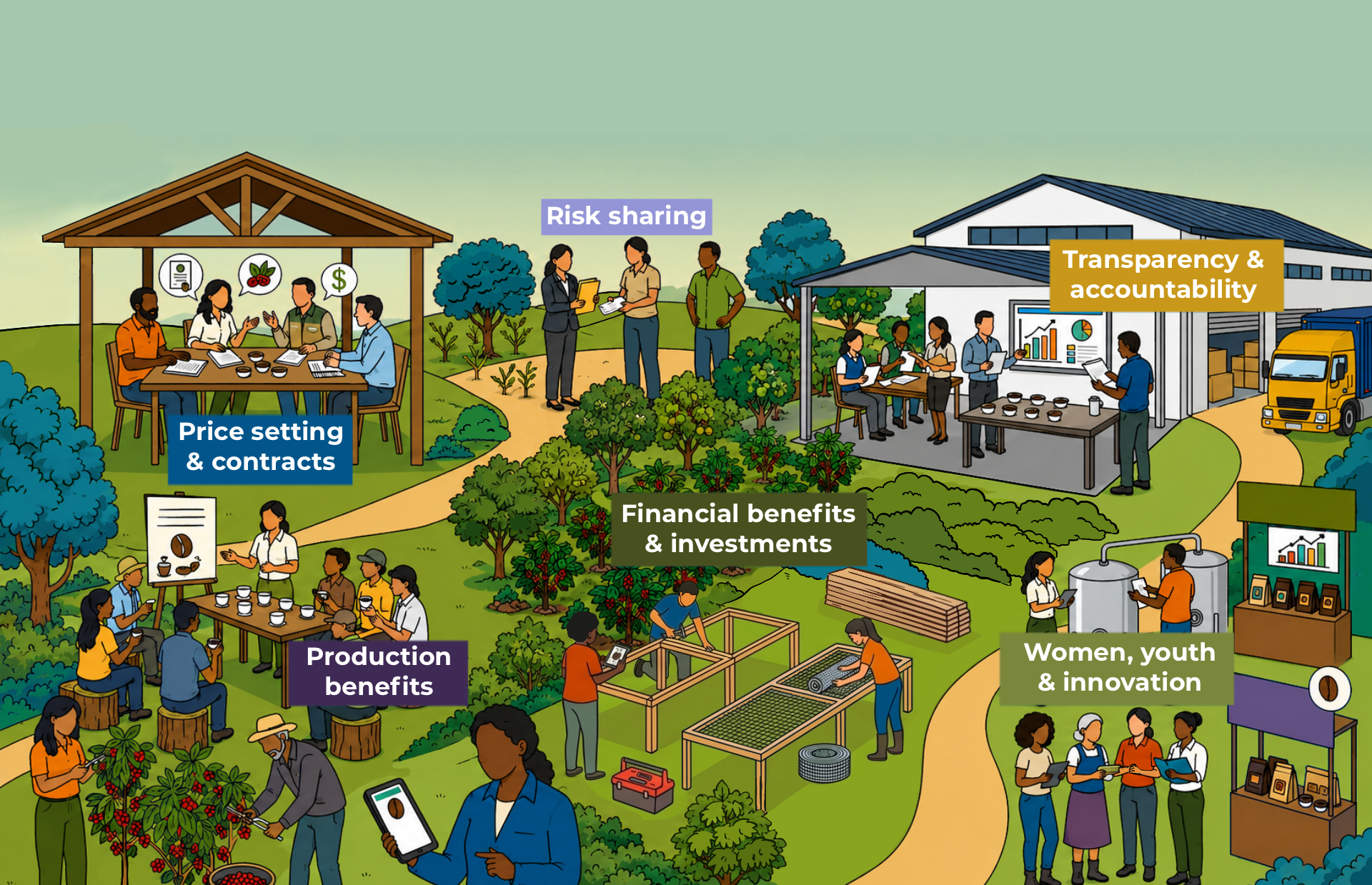
There is no one-size-fits-all solution to make your purchasing models more inclusive. While embedding sustainability and inclusivity in your core business may not be easily justifiable based on short-term economic calculations, it is the only thing that makes sense for the sustainability of the sector in the long run. Here are just three of the recommendations you’ll find in the publication:

Here are just three of the recommendations to generate win-win solutions for all parties involved in coffee business models:
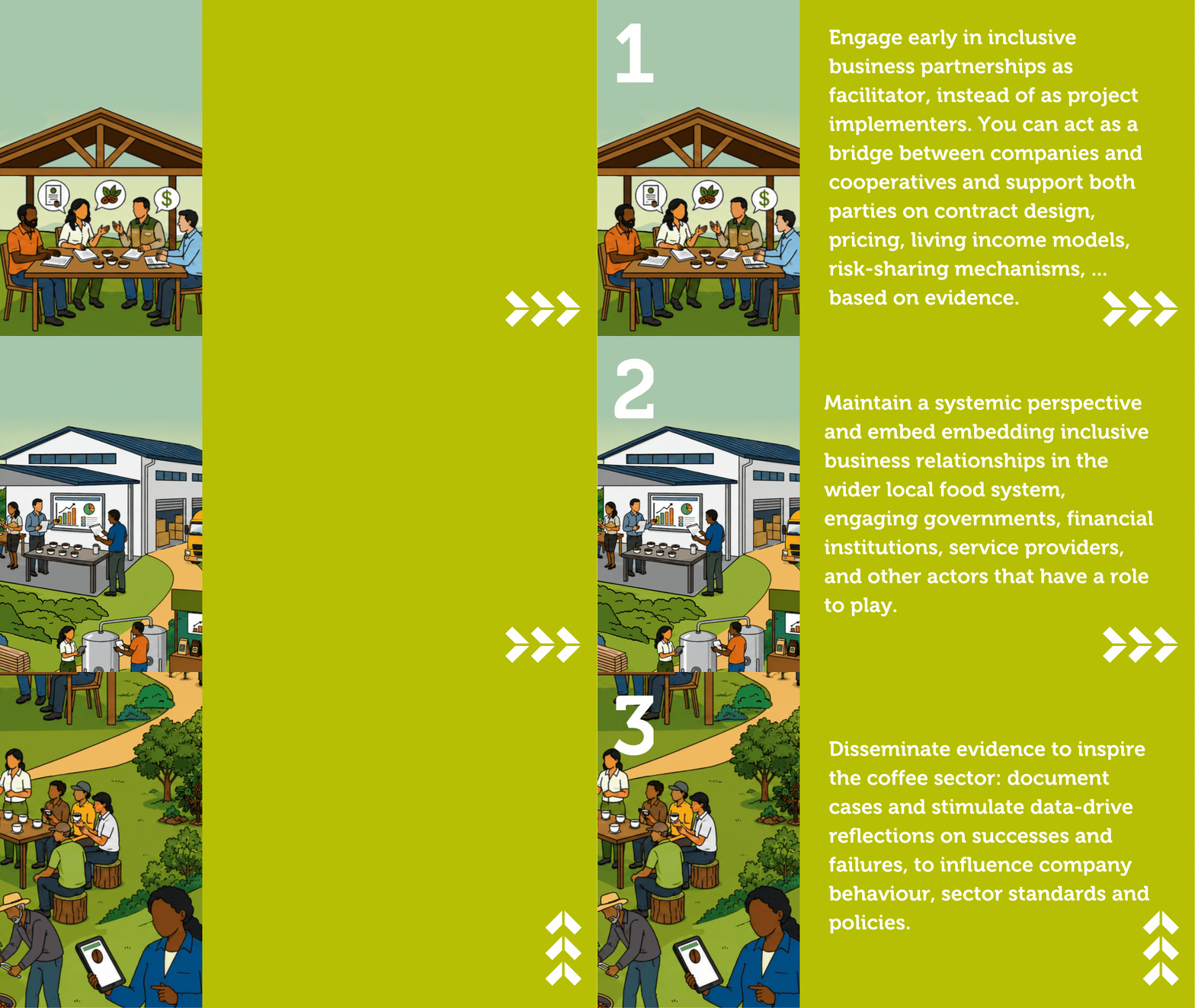
These recommendations are based on actual cases:

.jpg)
"Download the publication to dive deeper into all recommendations, and don't hesitate to reach out to me if you want to collaborate to transform business-as-usual into more inclusive business models!"

.png)
.jpg)

.jpg)