



Vietnam ships more rice, shrimp and coffee abroad than almost any other country. Now, it wants to change how those industries handle their waste. The country is the world's third-largest rice exporter, a leading shrimp exporter, and the source of over 40% of the world's robusta coffee. That scale is the point. It means a shift toward circular economy models - turning shrimp shells or rice husks into valuable resources instead of discarding them - could reach far beyond a handful of pilot farms.

On 9 July 2026, an event hosted by the Vietnam Sustainable Shrimp Alliance (VSSA) in collaboration with Rikolto, was opened by Mr. Le Van Su, Vice Chairman of the Ca Mau Provincial People’s Committee (PPC).
"In the context of increasingly severe climate change, a circular economy model has become an essential pathway for the future of agriculture."
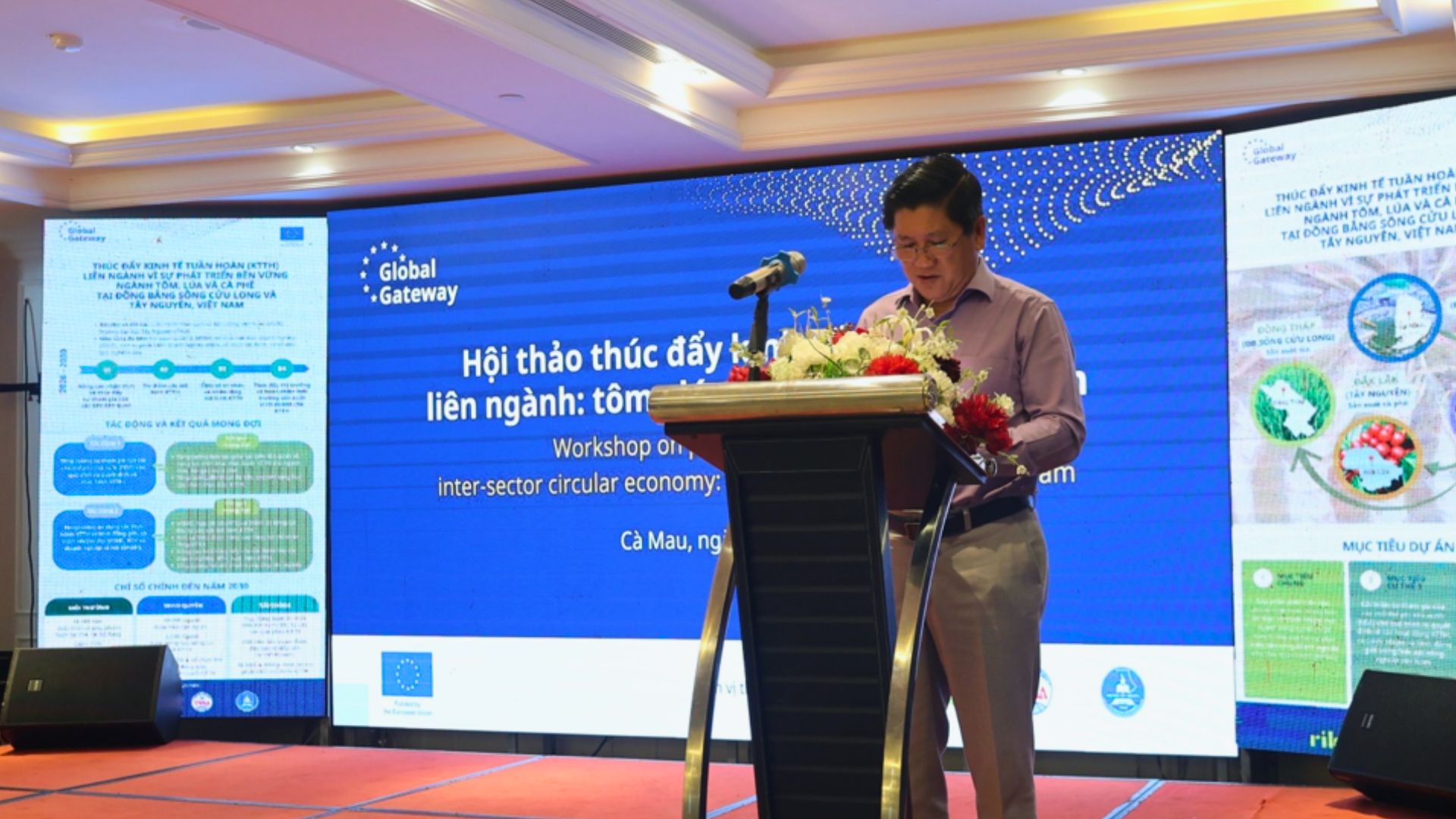
The workshop marked the official launch of the project "Driving Inter-Sector Circular Economy for Sustainable Shrimp, Rice and Coffee Farming in Vietnam's Mekong Delta and Central Highlands". The project funded by the European Union will be coordinated by Rikolto from 2026 to 2030, in partnership with VSSA and Tay Nguyen University (TNU).
During this event, Mdm. Kristina Buende, Head of Cooperation at the Delegation of the European Union to Vietnam, noted that despite Vietnam's global export position, its agricultural sector continues to face growing challenges stemming from climate change, increasing pressure on natural resources and rising sustainability expectations in international markets.
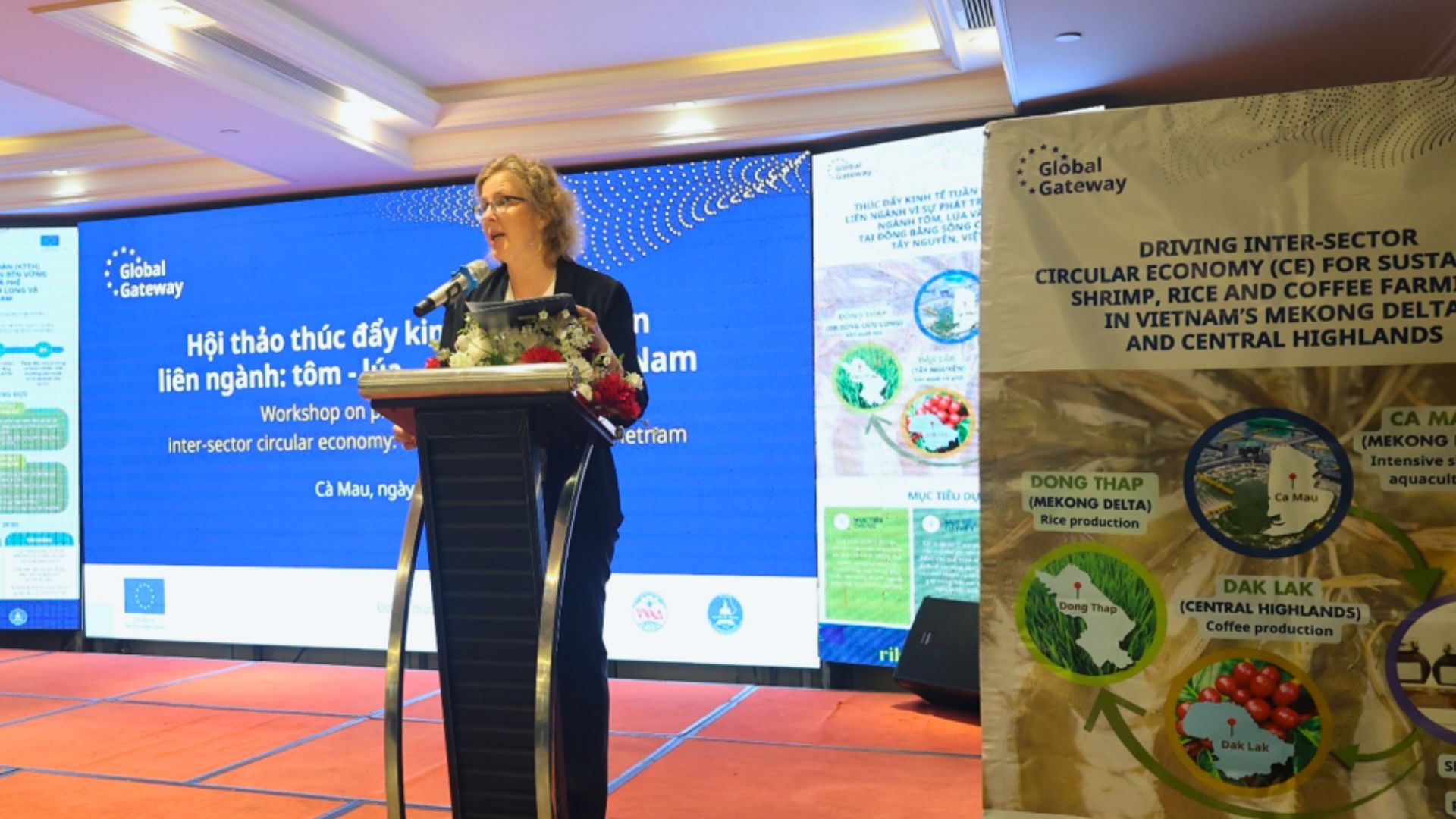
According to Mdm. Buende, adopting circular economy practices and models could provide a response to these challenges by using resources more efficiently, reducing waste and creating new value from materials that would otherwise be discarded. Such an approach not only protects the environment, but also can contribute to businesses remaining competitive, improve farmers' livelihoods, and strengthen the resilience of agricultural value chains.
That is why the project will work on strengthening the collaboration and linkages across the shrimp, rice, and coffee value chains.
In this initiative, the team from Rikolto and local partners behind the project will work alongside businesses, cooperatives and other value chain actors in adopting circular economy practices. This is parallel with improving access to green finance. And, perhaps, the more complex effort to incentivise the development of a circular economy ecosystem.
Ultimately, the ambition is to improve resource use efficiency, reduce greenhouse gas (GHG) emissions, enhance economic performance, and strengthen the market competitiveness of Vietnamese agricultural products.
Sharing Rikolto's vision for the project, Mr. Dam Trong Tuan, Rikolto in Vietnam’s Country Representative, stressed that while many circular economy initiatives have already been introduced in Vietnam, these efforts remain fragmented and insufficiently connected across commodities and production regions. The project therefore adopts an inter-sectoral and inter-regional approach, linking the shrimp, rice and coffee value chains while establishing multi-stakeholder platforms where farmers, cooperatives, businesses, government agencies, research institutions, financial institutions and development partners can jointly co-design, test and scale practical circular economy solutions.
Within Vietnam, Ca Mau, the country's largest shrimp-producing province, with distinctive production systems such as shrimp-rice, shrimp-mangrove forest and intensive/super-intensive shrimp farming, has significant potential to develop circular economy models that reduce emissions, make better use of agricultural by-products and generate greater value added throughout the production chain.

According to Mr. Nguyen Ba Thong, Project Coordinator at Rikolto, the 54-month project will focus on two main objectives:
Project activities include raising awareness and building capacities on circular economy practices, developing pilot models, strengthening Business Development Service (BDS) providers and Business Membership Organisations (BMOs), improving access to green finance and facilitating multi-stakeholder collaboration.
By 2030, the project aims to support 150 MSMEs and cooperatives in adopting and promoting circular economy practices; enable 10 MSMEs and cooperatives to access green finance; mobilise at least EUR 300,000 invested in circular economy solutions; transform 10,000 tonnes of waste and by-products into valuable resources; achieve an average 10% reduction in GHG emissions and carbon footprint; and equipe at least 5,000 people across the shrimp, rice and coffee value chains with circular economy knowledge and skills.
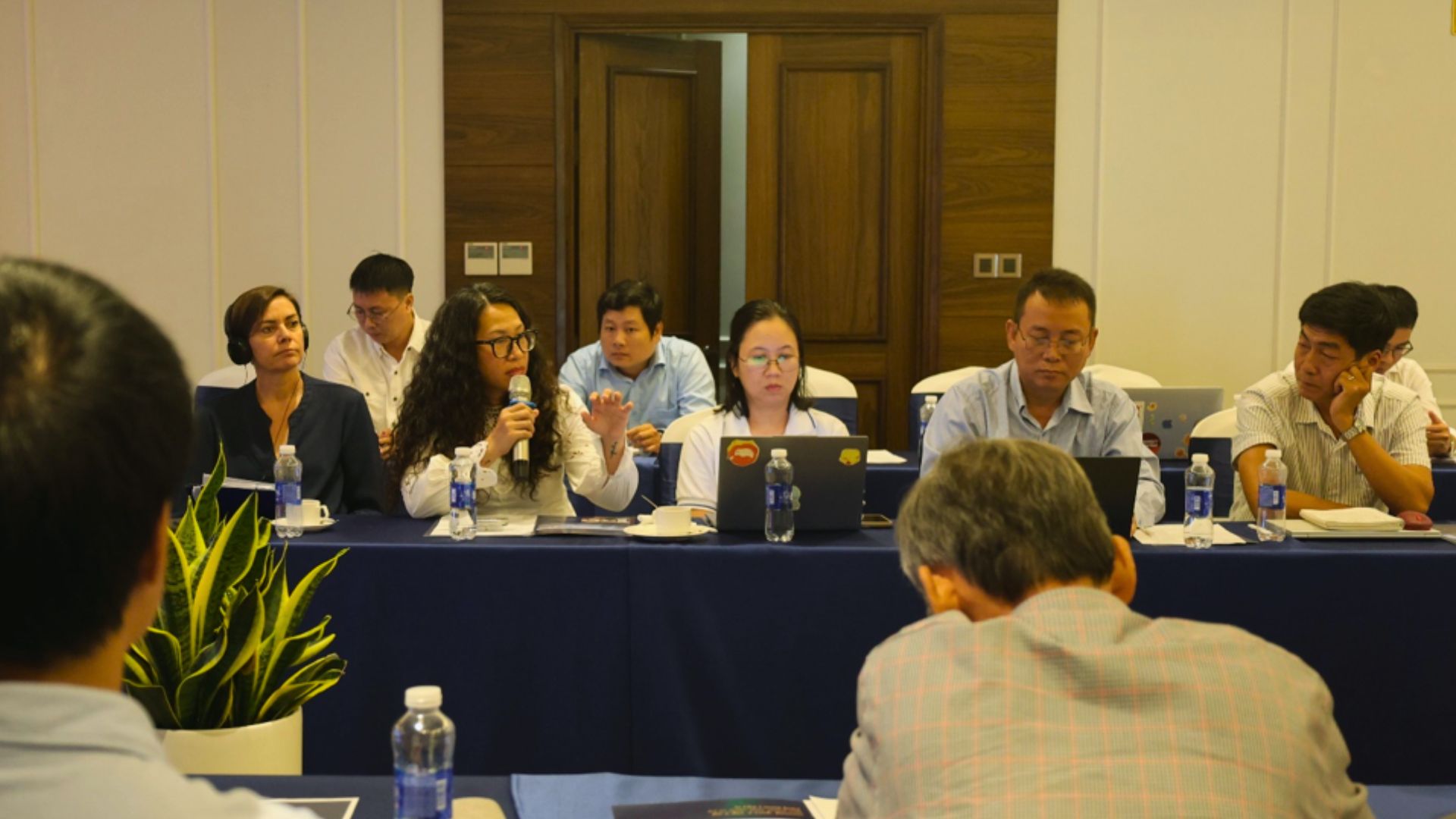
Discussions throughout the workshop reflected broad consensus that the transition towards a circular economy can only succeed through strong collaboration among public sector, businesses, cooperatives, researchers, development organisations and financial institutions; public private partnership should be prioritised to mobilize more resources needed for transitioning of the agricultural green growth.
Mr. Chau Cong Bang, Vice Chairman of VSSA, highlighted that the project comes at a critical time, as the need to transition towards circular, low-emission agricultural production systems continues to scale up. He expressed confidence that the initiative would pave the way for pioneering models and provide a strong foundation for testing, refining and scaling circular economy solutions in practice.
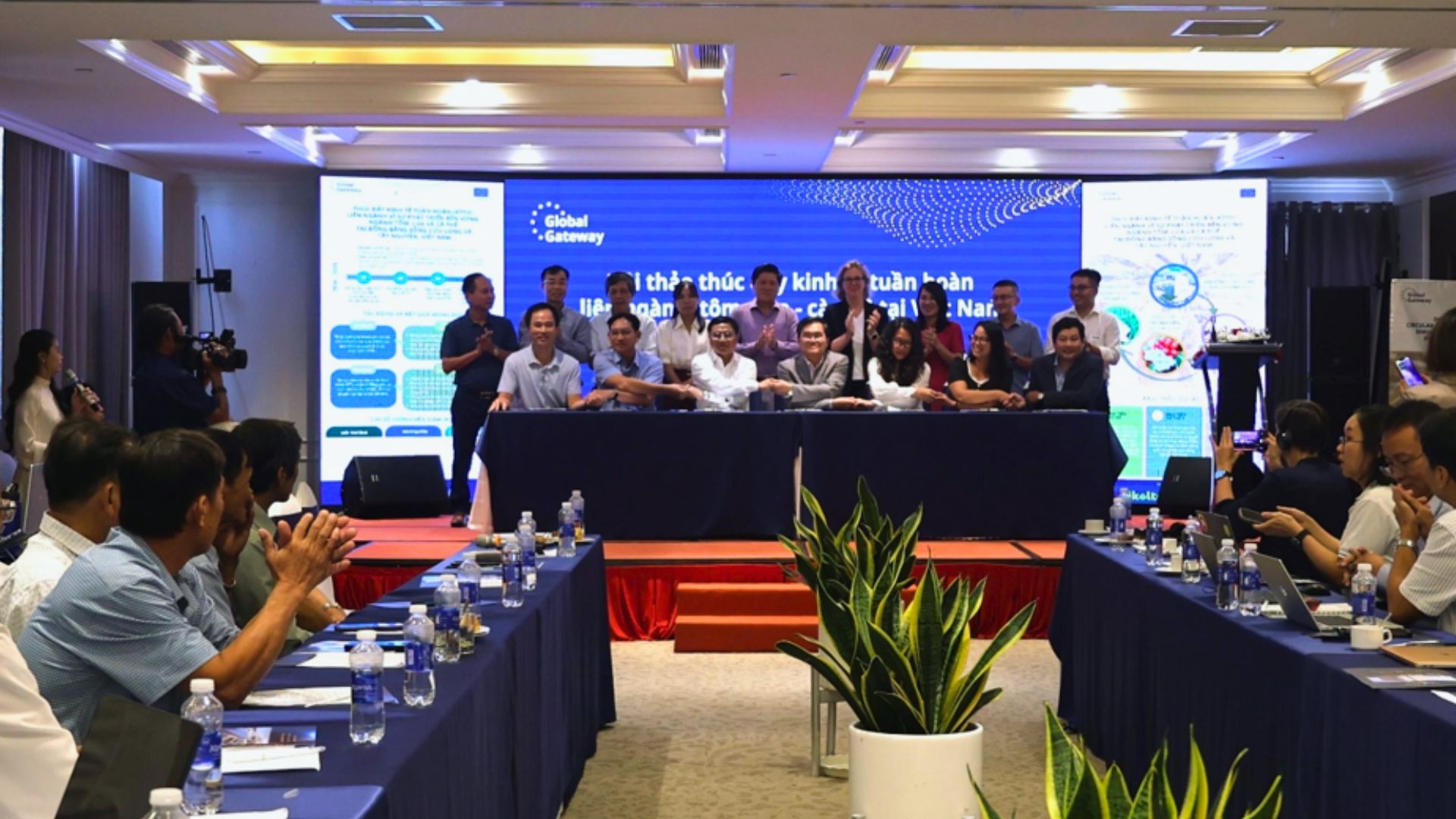
The workshop concluded with the signing of a Memorandum of Understanding (MoU) by seven partners: Rikolto, Vietnam Sustainable Shrimp Alliance (VSSA), Tay Nguyen University (TNU), Tan Hung High Productivity Shrimp Farming Cooperative, Vietnam Food (VNF) Company, Leanwares JSC., and the Institute for Circular Economy Development (ICED) under Vietnam National University in Ho Chi Minh City. The MoU formalises the partners' commitment to jointly implement the project during 2026–2030 and new parties are welcome to join the platform.
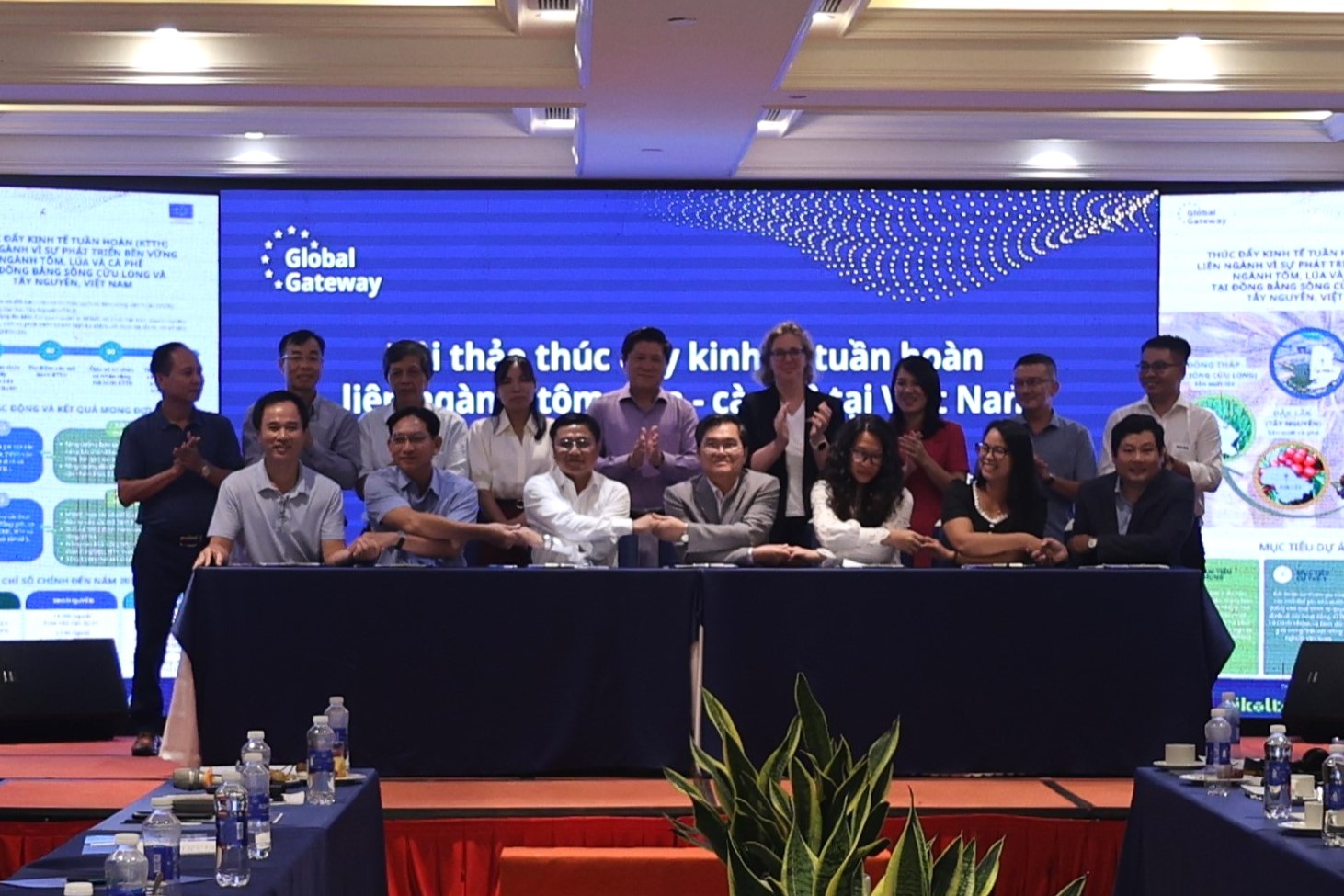
Under the MoU, the partners agreed to collaborate in three priority areas: (i) strengthening capacities and promoting circular economy practices across the shrimp, rice and coffee sectors; (ii) enhancing access to green finance, science and technology, and market opportunities; and (iii) jointly developing, testing, measuring and scaling inclusive and sustainable circular economy models through an inter-sector approach.
Moreover, the project lays the foundation for a new approach to agricultural development - one in which by-products are no longer viewed as waste, but as valuable resources that can generate new economic, environmental and social value through innovation and collaboration.
Obtaining financial support of the European Union to Vietnam and a strong network and partnership, the project is expected to contribute to the transition towards more sustainable, resilient and inclusive agri-food systems in the Mekong Delta and Central Highlands, creating lasting benefits for farmers, businesses and local communities.

.jpg)

.jpg)