

.jpg)
End of June, Brussels. Coffee professionals and lovers alike made their way to the Expo halls that hosted the World of Coffee this year, under a scorching sun. Like me, they were probably hoping to find an iced coffee or affogato among the stands. And perhaps, they were also drawing parallels in their heads: the same temperatures that were testing the resilience of European capitals these days, also put those areas supplying us with our favourite beans under pressure. Well, attendees were in luck. Cold brews were plenty, and to top it off, we had a refreshing conversation on the role of public-private partnerships in building resilient coffee systems. This article is a write-up of the lecture we delivered together with JDE Peet’s and SCA, with wins and lessons from three cases of joint investment.
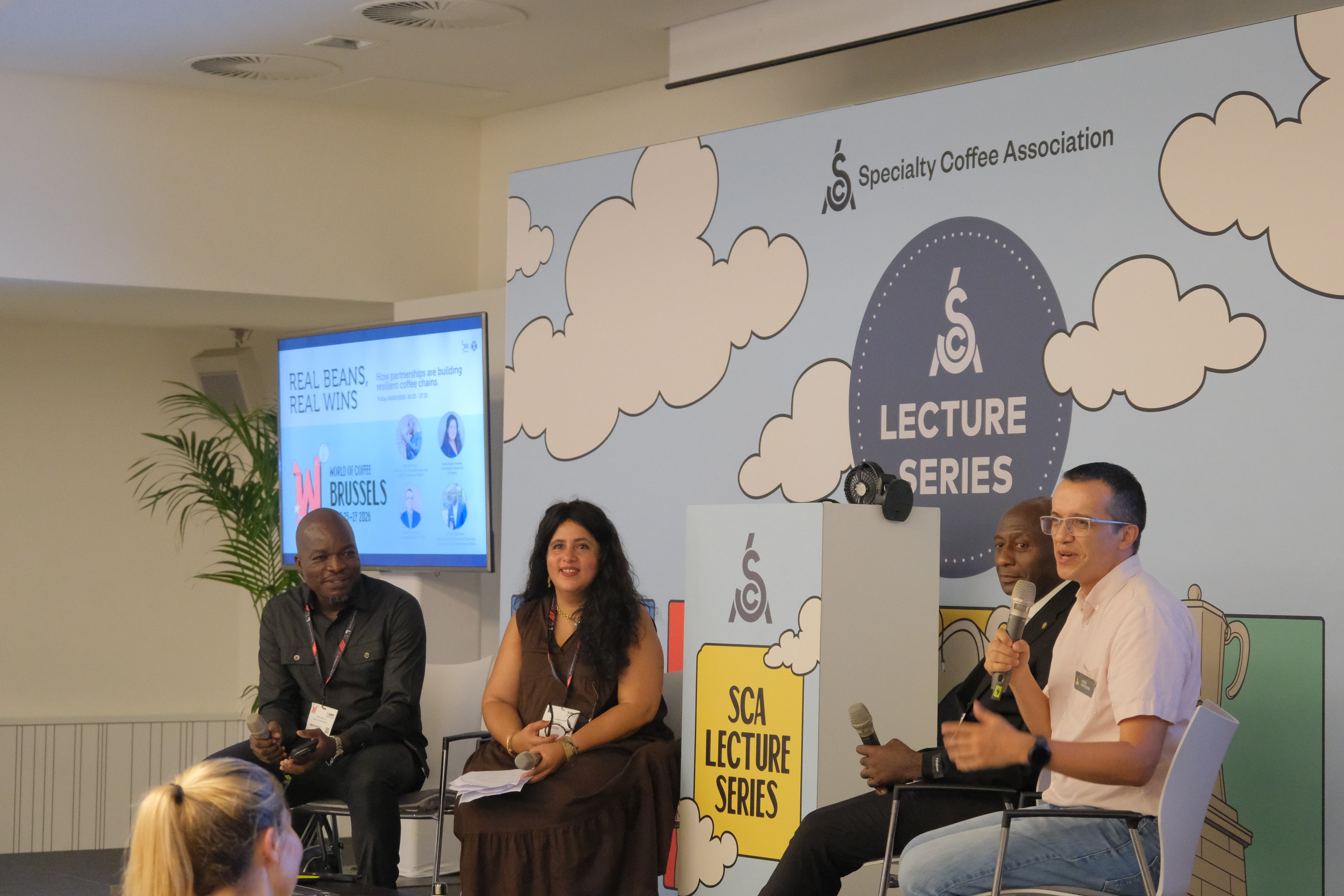
What needs to change to create more resilient and fair coffee systems? It all starts with common understanding. “Everyone talks about resilience, but depending on whom you are talking to, definitions vary”, says Abdulahi Aliyu, Global Director of Rikolto’s Sustainable Cocoa and Coffee Programme. A valuable framework in these discussions is SCA’s concept of Equitable Value Distribution.
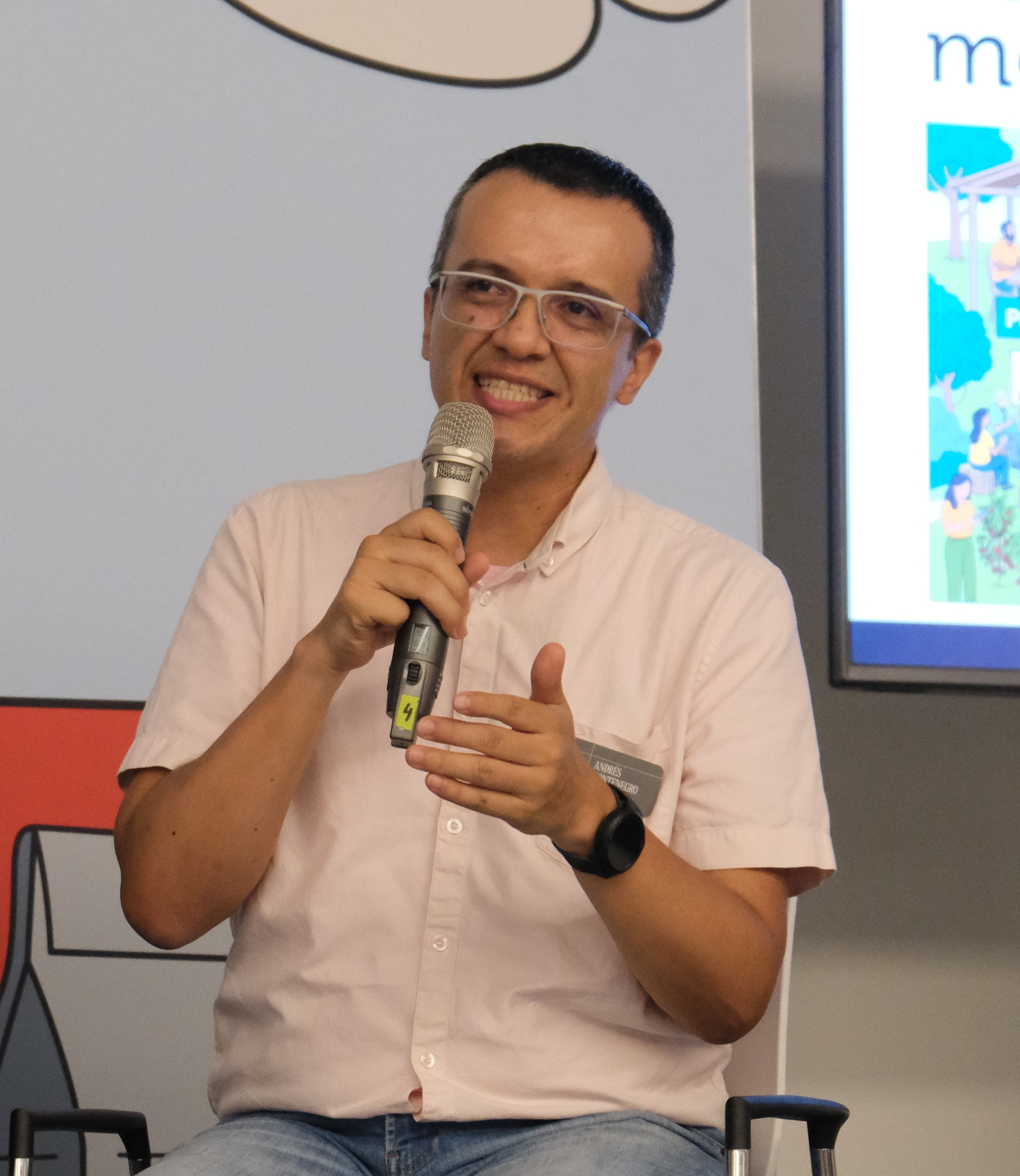
“To put it very simply: our priority is creating this understanding that value is much more than price.”
In its most recent paper, SCA explores the perceptions of value distribution in the specialty coffee sector, and how these impact the decisions that shape the sector. Above all, mapping out these perceptions can be a useful starting point for conversations that drive change in the coffee sector. So how can equitable value distribution look like in practice? What is the role of public-private partnerships in making it happen? How does it contribute to building a resilient coffee system? We took a deep dive into tried-and-tested solutions from three collaborations between Rikolto and JDE Peet’s, looking at how they create value. Scroll all the way down to the bottom of this article for a more in-depth analysis per case.
For JDE Peet’s, these investments are part of its Common Grounds programme. “As a large roaster, we see quite clearly that the success and resilience of our business depend on the resilience in coffee origins”, says Nadia Hoarau-Mwaura, Sustainability Director at JDE Peet’s. To be able to continue sourcing our coffee responsibly and reliably, we depend on resilient coffee communities. The Cajamarca case shows how collaboration and pooled investments can transform a sector while keeping communities at the centre. And the DR Congo case shows clearly how co-investments between companies, NGOs, and public institutions create a sense of shared responsibility that leads to securing fairer and more stable coffee chains, even in a high-risk context.
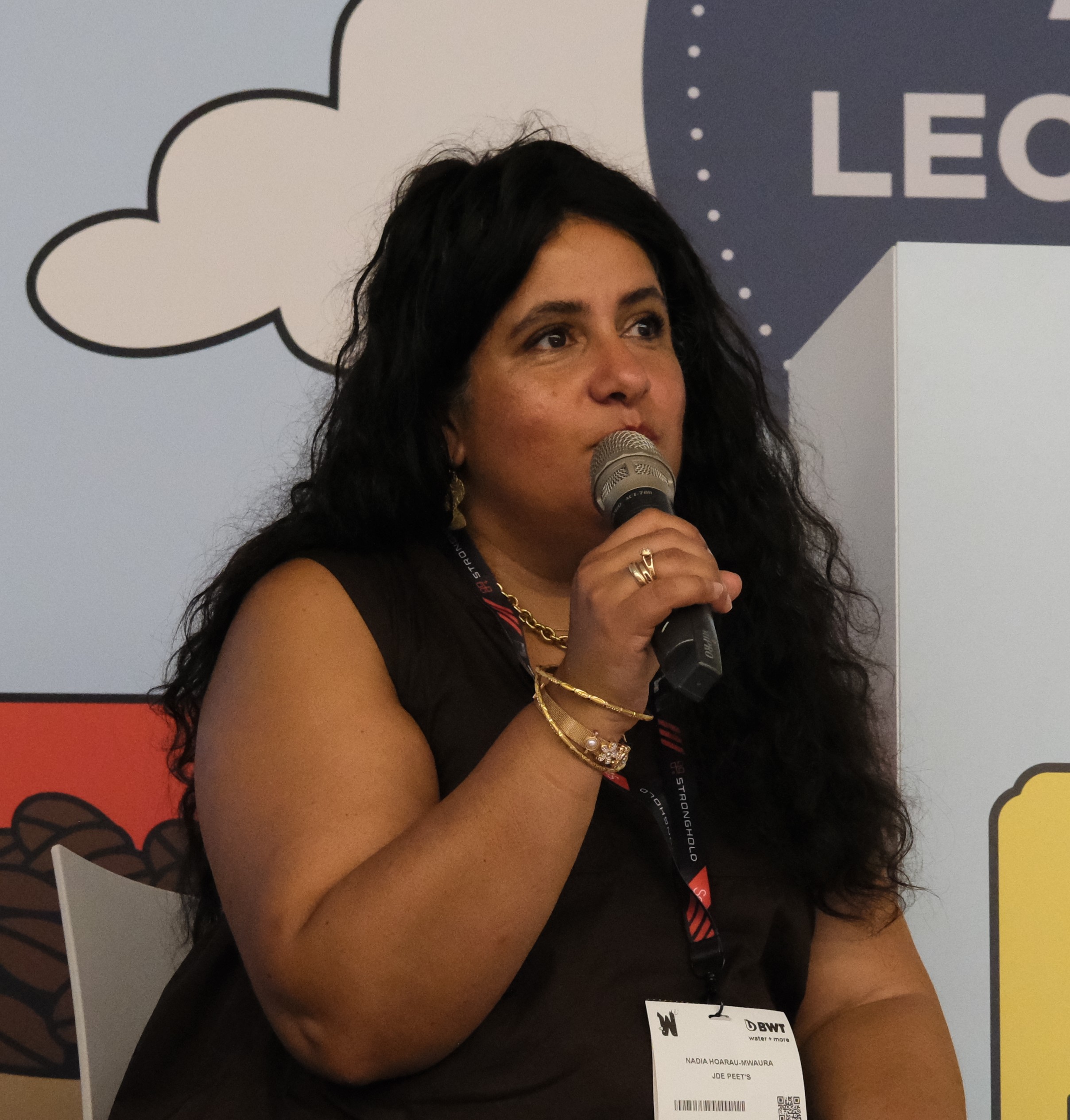
“These cases show that resilience is built at sector level. We collaborate with Rikolto to identify the best entry points to work on resilience. There is no single solution. It needs to be context-dependent.”
The cases also show how crucial the engagement of the public sector, as enabling actor, is – whether that is through infrastructural works to enhance market access, especially in high-risk areas, as architects of multi-stakeholder dialogues, or by co-investing in sustainability initiatives led by the private sector, amplifying their impact. Across these different contexts, Rikolto has acted as a connector between different actors with stakes in the coffee sector.
The three above-mentioned cases are all in different stages of their progress but demonstrate clear potential for impact. What are some of the conditions for the success of these collaborations so far? What can others take with them to set up public-private collaborations that aim for shared value and more resilience in the coffee sector?
For Nadia Hoarau-Mwaura, it comes down to being very intentional about doing and learning; setting up intentional collaborations with clear goals and objectives, so that you are not only doing things right but also doing the right thing.
For Abdulahi Aliyu, it boils down to having that difficult conversation. When results are not as expected: reach out, have the conversation. That is how you build trust. “We do not shy away from seeing that we are wrong. Because that is also the best way to find out how we can make things better. We are only where we are today because of this.”
Throughout the conversation, the conclusion arose that a resilient coffee sector is one in which partnerships are built on transparency and shared ownership; one in which value is distributed equitably; and collaborations are embedded end-to-end, from origin to the cup. It is refreshing to remember that, while there is a fair share of work to be done to reach a resilient coffee sector, there are tried-and-tested solutions that show possible paths forward.

Are you looking for additional examples of equitable value distribution in practice? In our new paper, we take a deeper look into procurement practices to distribute value more equitably across the coffee sector. Download it here. If you are a buyer or roaster looking to invest in the resilience of your supply chain, we would welcome a conversation about what that could look like for you.
In West Lampung and Tanggamus, coffee yields are well below their potential: rising temperatures and unpredictable precipitation patterns have disrupted traditional coffee farming practices. The objective of the CULTIVAFE project is to improve the income and resilience of coffee farmers by promoting sustainable coffee production practices. As such, investments were made in climate-smart practices: 2,815 farmers trained, of whom 20% were women; of these 1,134 farmers are 4C certified (38% women); and 1,143 MT of certified beans are expected for the next harvest. Initial results point to projected productivity and income increases as additional value that is created for farmers. On the regulatory front, farmers were introduced to the requirements of the EU Deforestation Regulation (EUDR) and began adopting deforestation-free practices as part of their farm management. To strengthen this process, we collaborate with Forest Management Units and the local government to support Indonesia’s e STDB (Surat Tanda Daftar Budidaya Elektronik) programme. E STDB is a national digital registry that records smallholder data, including geolocation, land legality, and planting information, serving as official proof of cultivation. This integration is crucial because e STDB not only facilitates EUDR compliance through improved traceability but also enables farmers to access government support, financing schemes, and sustainable market opportunities. To date, 3,379 farmers have been registered (25% women), and polygon verification has taken place on 2,817 ha of land designated for coffee cultivation. Farmers own their own data through the e-STDB database. Moving beyond data extraction to shared and farmer-controlled databases is an example of additional value creation at farmer level.
Drawing on a collaborative and participatory approach, we enabled the creation of a public-private multi-stakeholder platform to promote sustainable coffee production, stronger farmer organisations, market positioning and coordination across Cajamarca’s coffee sector. Since its inception in 2021, the platform has grown from 26 to 40 members, and its impact reaches over 2,700 coffee producers. Through this platform, investments are coordinated around shared priorities such as climate resilience. Sector-wide capacities like governance and market positioning are strengthened, and system-level efficiency and innovation, from digital tools to carbon practices, are made possible. The platform makes it possible to move away from fragmented, standalone projects towards collective value creation at sector level.
Robusta has long accounted for 70% of coffee production in the DR Congo, yet the variety has withered. Through this collaboration, Rikolto and JDE Peet’s in partnership with the local government aim to revitalise the robusta coffee sector in North Kivu and Ituri, and make it more resilient, sustainable and inclusive. It leverages other, already existing projects in the area such as the IFAD-funded PASA-NK that Rikolto also executes in the area. To date, 5,579 farmers were introduced to or informed about VSLAs, and 144 Village Savings and Loans Associations have been set up to increase financial resilience, with 1043 USD/ group. Savings allow members to invest in their farms, as well as in off-farm income-generating activities. This addresses liquidity constraints and reduces dependency on coffee. 90 women were trained in off-farm income-generating activities including processing cassava into chikwange. This translated into a 312 USD monthly net income for each woman, compared to a living income benchmark of 219 USD in the same area. In this project, value is created as investments allow farmers to move away from a single, volatile income to a diversified income portfolio that increases total household value.

.png)
.jpg)
.jpg)