
Did you know that in Burkina Faso, women are the true pioneers of rice processing? While men often dominate other grain industries, parboiling is a field where women lead the way. Back in the 1990s, when the market was flooded with cheap imported rice, these women organised themselves to buy local paddy and process it themselves, preventing the sector from collapsing.
Today, the National Union of Rice Parboilers of Burkina Faso (UNERIZ) represents 7,000 of these professionals (out of a total of 16,000)1. In 2025, with the support of partners such as Rikolto, they injected more than 2.2 billion CFA francs (€3.4 million)2 into the local economy, processing over half of the national paddy production and bringing more than 9,300 tons of parboiled rice to market.
Although the growing preference for local consumption has increased the commercialisation of Burkinabè parboiled rice, securing funds for growing remains a challenge. Rising interest rates and limited capital continue to limit what these women can achieve. As Alimatou Ouedraogo/Traoré, Permanent Secretary of UNERIZ, explains: “Without enough storage space, women can't buy and keep enough rice to meet demand year-round.” Solange Pare, the Union's Secretary General, adds “Having sufficient resources is crucial to providing advance payments to producers before the marketing season,” thereby supporting both rice farmers’ production and sustainability efforts.
Having sufficient resources is crucial to providing advance payments to producers before the marketing season.
[1] https://openknowledge.fao.org/server/api/core/bitstreams/2ed4c8da-5eb2-4b87-b8c9-2734d5eab71f/content
[2] The model has generated significant net income for the franchisee parboilersand their families (1,670,306,400 CFA francs, equivalent to 2,546,355.7 euros), the parboiling centres (624,879,225 CFA francs, equivalent to 952,623.24euros), and the franchisor/UNERIZ (256,645,000 CFA francs, equivalent to391,253.78 euros).
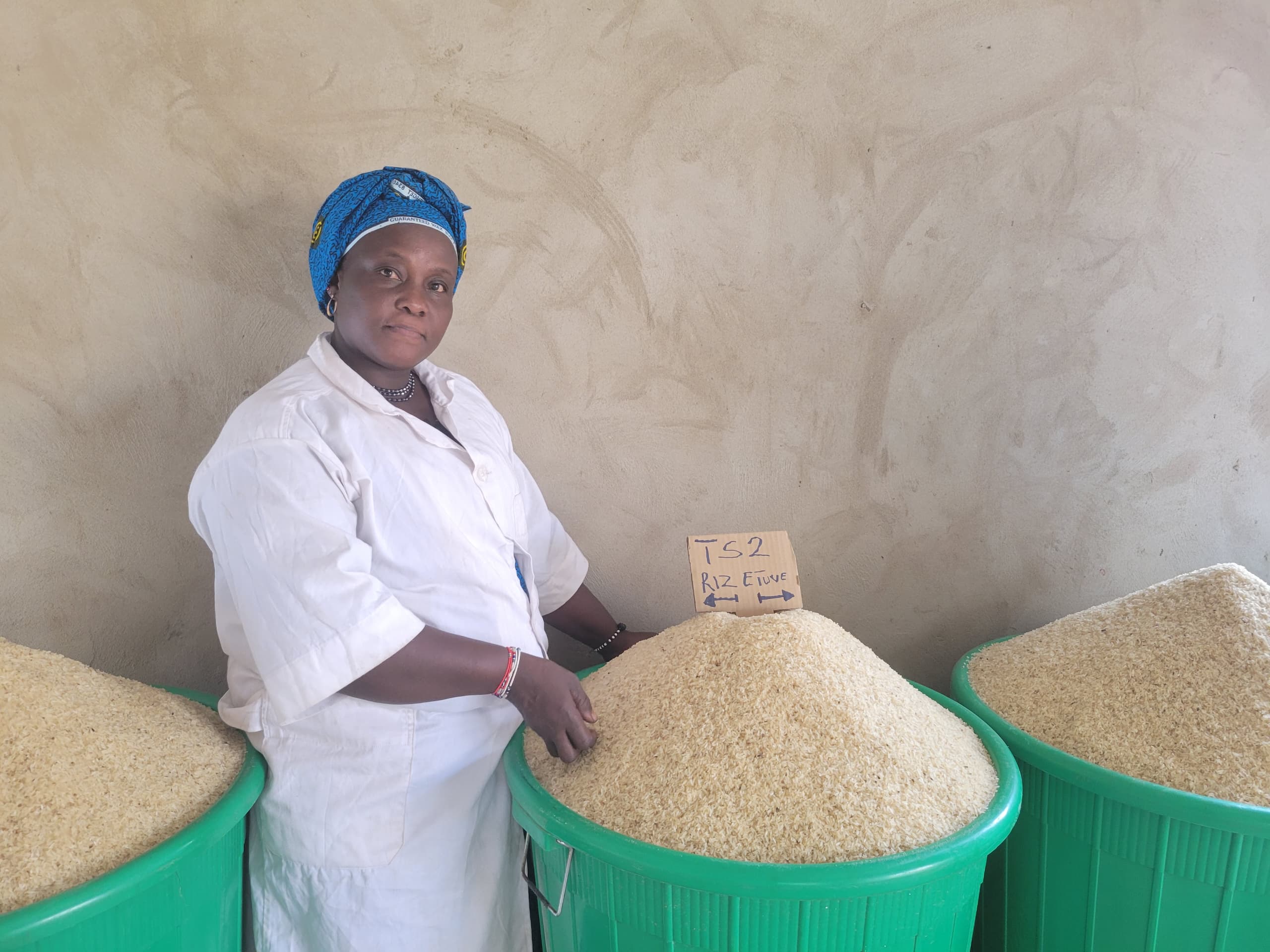
To build a sustainable financing system, foster market inclusion for parboilers and support the formalisation of their businesses, UNERIZ and Rikolto co-created a franchise model. Under this model, women parboil rice at home, while final processing takes place in specialised centres. Each woman runs her own micro-enterprise under contract with UNERIZ. This setup guarantees paddy producers a market to sell to and ensures favourable prices and access to commercial credit. It also offers consumers certified quality under a shared brand.
To ensure meaningful empowerment, UNERIZ has made capacity building a core part of its services. Kalizèta Ouédraogo, who has been a member since 2011 and is now head of quality control at the Bama Rice Parboilers Cooperative, explains, “We received training in marketing, basic accounting, marketing strategies and leadership, and I gained additional knowledge in customer management.”
Technical support, combined with the opportunity to invest in improved parboiling equipment through a UNERIZ fund, enables women to make their activities more profitable.
The franchise has enabled women to increase their output from 6–8 tons per year to 40–60 tons, with some reaching up to 100 tons.
“The franchise has enabled women to increase their output from 6–8 tons per year to 40–60 tons, with some reaching up to 100 tons,” explains Dr. Michel Tougma, Rice Project and Programme Manager at Rikolto in Burkina Faso.
Thanks to increased production and improved quality, as well as a 14% rise in selling prices, the net income of parboilers has almost doubled3.
[3] Yaméogo, B., Tougma, M., Van den Steen, T., & Interpares, P. (2024). Social Return on Investment(SROI) Analysis Report: Case study of the UNERIZ rice drying business model.
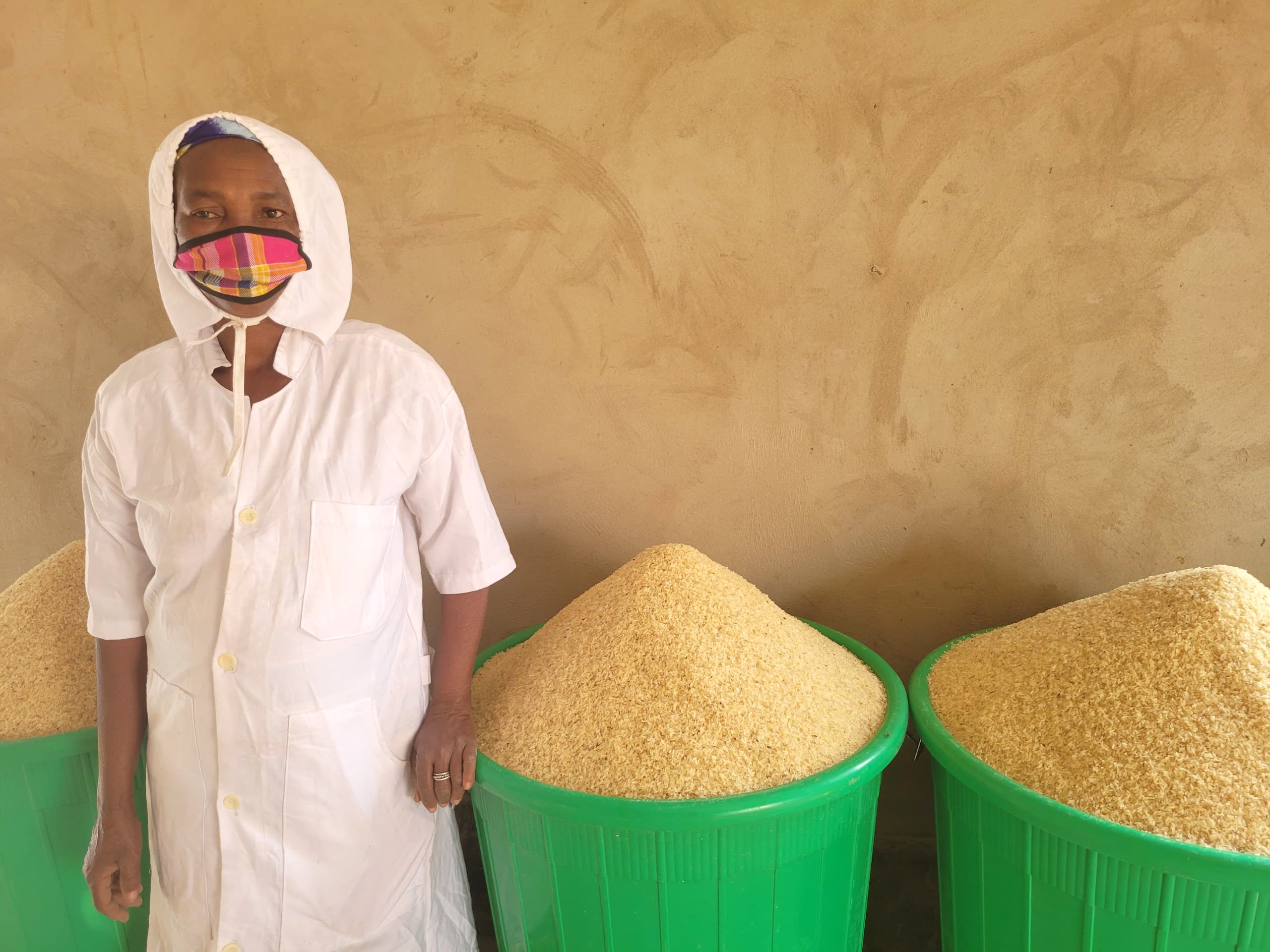
This model has also become a driver of local employment, with each franchisee creating an average of two job opportunities for other women in their community4. For instance, thanks to a commercial and legal agreement with UNERIZ, Maïssata Kara, a parboiler, was able to formalise and strengthen her business in 2020. She now employs eight people, including two permanent members of staff.
The network has grown from just 40 pioneers in 2017 to 500 franchisees by 2025. While environmental considerations are important - the National Union of Rice Producers (UNPRB) prefers SRP-certified rice5 because of its quality - the decision to join the network is primarily driven by its direct impact on costs and income. Nevertheless, the benefits extend far beyond a functional business model; currently, the model generates almost double the social and economic value6 of its implementation cost.
[4] Rikolto, Mid-term evaluation in 2024: “Women parboilers generate on average 2 to 3 additional full-time women and 3 to 5 part-time women.”
[5] Rikolto supports UNRPB farmers in adopting sustainable agricultural practices in line with SRP (Sustainable Rice Platform) standards
[6] Yaméogo, B., Tougma, M., Van den Steen, T., & Interpares, P. (2024). Social Return on Investment(SROI) Analysis Report: Case study of the UNERIZ rice drying business model.
Can a business model contribute to reducing gender inequality and promote equity in rural areas? The experience of UNERIZ shows it can. Rice parboiling provides women with significant income, ensuring financial autonomy for themselves and their families. “I contribute to household expenses—clothes, food, children’s health, and education,” says Kalizèta. Maïssata adds that her income allows her to maintain her shop and equipment, organise celebrations, and even build up savings. Their success has also changed perceptions. Today, many husbands actively support their wives’ success, whether by helping with paddy sourcing or finding premises. Moumouni Kindo, Kalizèta’s husband, puts it simply: “Anyone who knows their wife can contribute to the family must support her. We need to help each other move forward.”
For Solange, Kalizèta, and Maïssata, their success as entrepreneurs has earned them the legitimacy to take on top-tier leadership roles within UNERIZ - respectively as Secretary General, President and Vice President. As the country’s only national umbrella organisation for parboilers, UNERIZ now carries significant weight, and its leaders' influence reaches far beyond the union to key decision-making bodies across the rice sector.
Rice parboilers are now seen ad key actors in the development of the rice sector.
“Rice parboilers are now seen ad key actors in the development of the rice sector,” notes Soumaïla Sawadogo, Technical Assistant at the Interprofessional Rice Committee of Burkina Faso (CIRB). They now sit on an equal footing with men in strategic bodies such as the CIRB and contribute to the work of the Confédération Paysanne du Faso (CPF) and the National Rice Observatory (ONaRiz), of which UNERIZ is a founding member. By strengthening capacities, providing strategic advisory support, and facilitating dialogue spaces with sector actors at national and international level, Rikolto works to ensure that UNERIZ is increasingly represented and valued alongside male-led farmer organisations. Reflecting on UNERIZ’s role within CIRB, Kalizèta Ouédraogo concludes: “They listen to us… They respect us.”
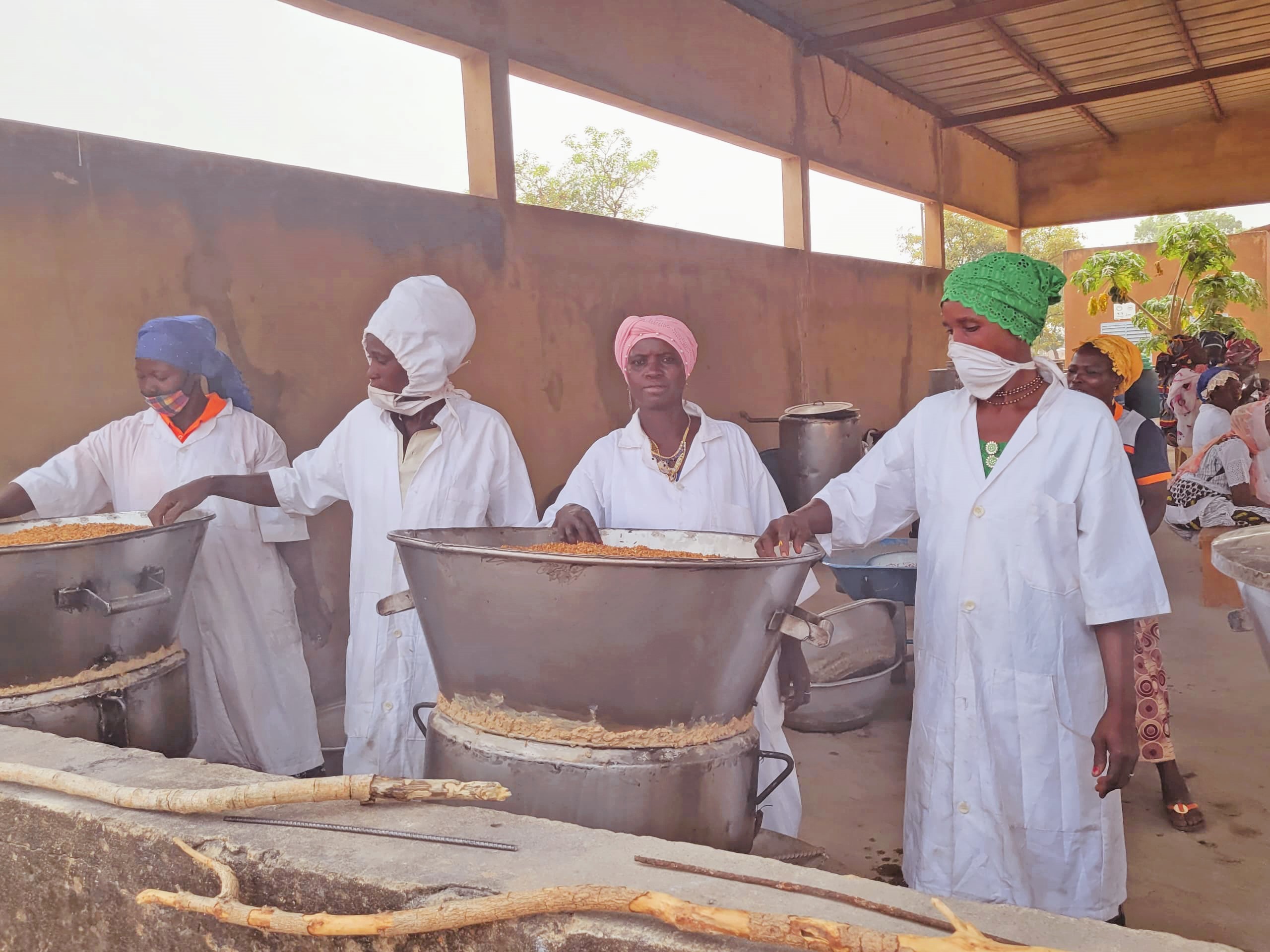

UNERIZ’s growing leadership is also reflected in policy wins. For a long time, parboiled rice, despite requiring significantly more labour, was sold at the same price as white rice. In 2024, UNERIZ’s advocacy paid off: a specific floor price of 500 CFA francs was set for parboiled rice, compared to 400 CFA francs for white rice. This recognition was reinforced by concrete government support. In February 2025, the Ministry of Agriculture provided parboilers in Douna with milling equipment to improve the quality of the final product.
As consumers become more demanding, quality has become a key factor for competitiveness. Without sufficient modern equipment, parboilers must rely on long and exhausting manual sorting processes to ensure grain purity. To address this, Rikolto and UNERIZ co-designed a second business model, complementary to the franchise, focused on finishing and distributing high-quality parboiled rice. Kampani, an international social impact investment fund, was convinced to finance a Finishing and Distribution Centre by the viability of this model. This centre centralises the final production stages: thorough cleaning, precision optical sorting, and professional packaging.
.png)
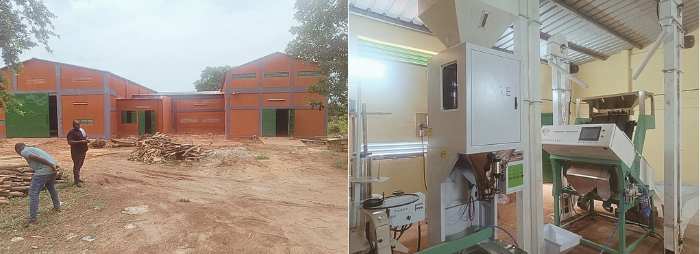
The leaders of UNERIZ are already looking towards 2030, and the inauguration of the finishing centre is just one step in this process. Maïssata dreams of achieving certified quality standards for their rice, while President Kalizèta plans to expand storage capacity and acquire new milling units. The combination of collective organisation and a shared, ambitious entrepreneurial vision transformed a survival activity into a successful model that is already expanding beyond Burkina Faso.
“Through the franchise, we truly understood the importance of working together, building networks, creating a brand, and organising collective sales,” says Aïcha Diakhaté Sow, President of the Regional Union of Parboilers in Ségou. Inspired by the Burkinabè example through exchanges organised by Rikolto, Mali’s National Association of Rice Processors (ANTRM) has adopted the franchise model. This initiative is also gaining ground in Benin, where a pilot project is set to launch in 2026. The project will focus on empowering young women and aims to gain access to institutional markets, including public canteens.
Between tradition and entrepreneurship, these women are steadily transforming the local economy and inspiring new dynamics across the region. They will continue to keep their pots boiling and expand into new markets.
.jpg)


.jpg)



.jpg)