
“With coarse rice to eat, with water to drink, and my bent arm for a pillow – I have still joy in the midst of all these things.” These words, attributed to the Chinese philosopher Confucius, resonate just as strongly today as they did centuries ago. As the primary staple for more than 3.5 billion people, rice is the most widely consumed grain on the planet. In several East and Southeast Asian languages, the same character means both “cooked rice” and “meal”. To eat is, quite literally, to eat rice.
Rice colours a paella in Valencia, it gives body to a creamy risotto in northern Italy, it’s the soul of a fragrant thieb or jollof in Dakar and of countless “arroz con…” dishes – both savoury and sweet – across Latin America. This cereal fits many diets and is a nutritional powerhouse. It accounts for roughly 19% of all human dietary energy worldwide providing a steady source of energy and essential micronutrients. It's no surprise that Confucius saw rice as a source of joy and chances are, it has provided you with energy at some point this week.
So, is rice the ultimate key to promoting nutritious diets? While it is a formidable ally, its benefits depend on how it is produced and what variety is grown, as well as the degree of processing it undergoes. Its impact also depends on its physical and economic accessibility, and the proteins and vegetables with which it is paired.
Our food choices are influenced by where we live, our culture and even our biology. For example, I often find myself craving sugar when I’m feeling blue, do you? Our first “food lessons” usually take place at home and at school – two environments that influence our eating habits and which can last a lifetime. At Rikolto, we recognise that to transform food systems, we must influence these very settings.
This is why, in 2024 Rikolto joined the School Meals Coalition, a multilateral initiative that now includes over 100 member countries and 150 supporting organisations. Despite its recent launch, the coalition has seen unprecedented engagement, reflecting a global consensus: schools are a front line to promote healthy diets. Promoting sustainable diets is one of the key pillars of our Good Food for Cities programme working with 450 schools worldwide but it’s also a cross-cutting challenge and a bridge between the different crops and programmes we support. Let me walk you through the initiatives promoted by our teams working in the rice value chains in Burkina Faso and Mali.
Burkina Faso responded to the global food crisis of 2008 with bold investment in the agricultural sector, leading to a doubling of rice production between 2008 and 2018. Yet a striking imbalance emerged: farmers were producing more rice than ever but struggled to find buyers, while the Ministry of Agriculture continued to spend heavily on imported grains. To bridge this gap, Rikolto joined forces with the National Union of Rice Producers (UNPRB) and partners such as TRIAS, SNV, RECIF/ONG and RFAE in an advocacy campaign to “reclaim” institutional markets and feed Burkina Faso’s people with their own harvest.
This led to a 2021 breakthrough: a formal agreement between the Ministry of National Education and Literacy (MENA) and UNPRB to supply local rice to school canteens. At the same time, the Decree No. 2017-002/PM/CAB was reinforced: “State structures such as school and university canteens, vocational training centres, military barracks, hospitals and prisons, among others, must give priority to the purchase of local products for their food supply.”
State structures such as school and university canteens, vocational training centres, military barracks, hospitals and prisons, among others, must give priority to the purchase of local products for their food supply
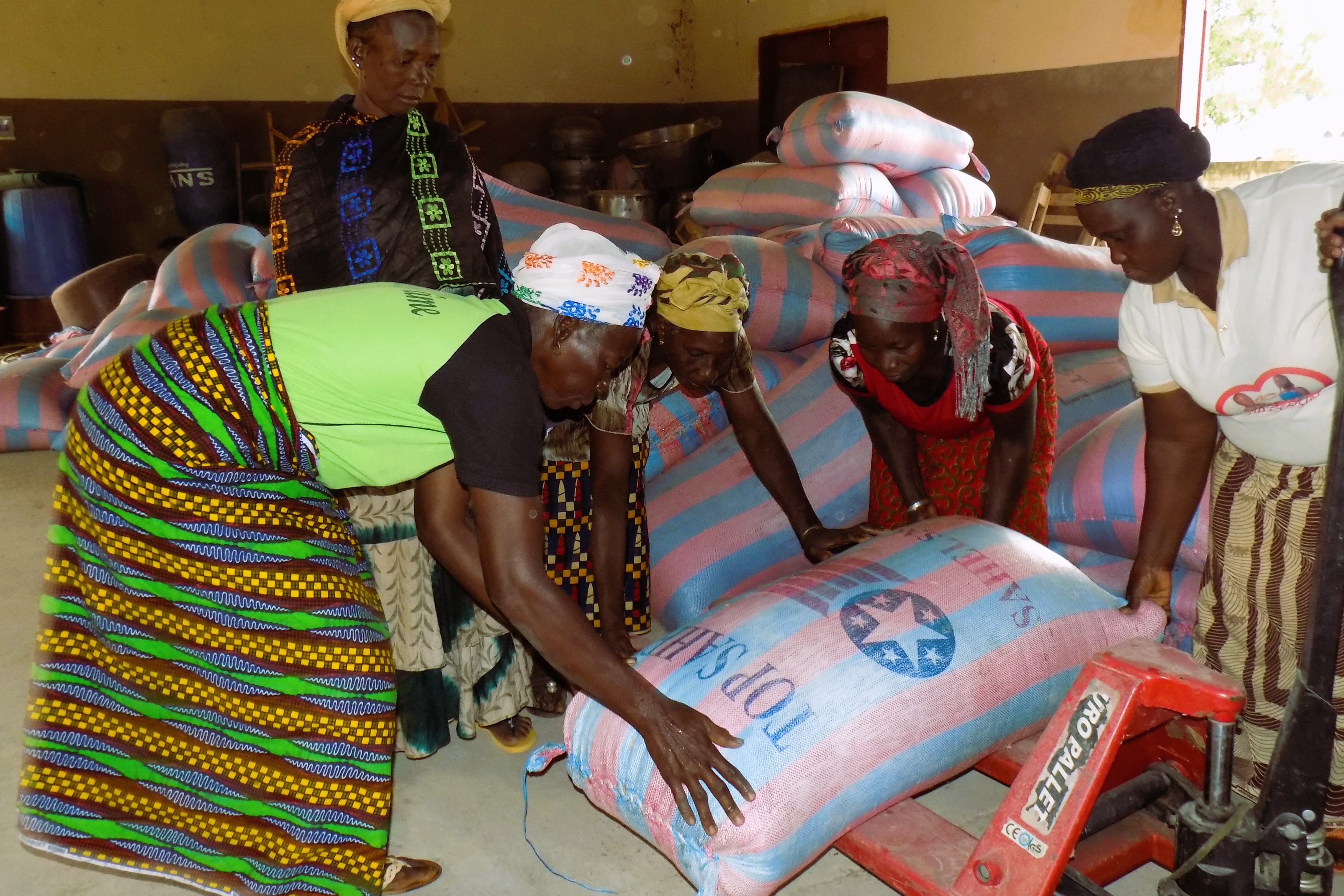
The volume of local rice purchased for schools increased from 14,200 tonnes in 2022 to nearly 20,000 tonnes in 2025. Alongside supporting UNPRB and National Organisation of Parboiling Women in Burkina Faso, UNERIZ, in negotiations with MENA and institutional buyers such as World Food Programme (WFP) and Catholic Relief Services (CRS), we organised training for school cooks to adapt preparation methods to specific local rice varieties and parboiled rice. Unlike imported rice, often stored for years and extremely dry, fresh local rice retains more moisture and requires different cooking techniques.
For Bakene Hema, a first-grade teacher at School B in Douna, the quality of locally produced rice is beyond question. “We know where this rice comes from,” he explains. “It’s produced here by our own farmers. That means it’s not old stock, so we can trust that it’s fresh.” For him, local rice offers clear advantages for consumers, especially when it is used in school meals. “The risks linked to consumption are lower because we know how this rice is produced and where it comes from,” he says. “The women who prepare the meals here are mothers themselves, and some even have children at the same school. They take their responsibility for the canteen very seriously and would never serve a bad meal”.
In the end, it became a win for farmers, institutions and students alike. The Ministry reduced storage costs and logistical challenges thanks to the proximity of producers. Students gained access to fresher, higher-quality rice supporting their health and development. Producers and women parboilers secured a reliable market, strengthening their creditworthiness with financial institutions. Plus, they strengthened their voice in negotiations during the biennial consultation frameworks, where our partners UNPRB, UNERIZ and the Rice interprofessional Committee of Burkina (CIRB) engage with the government to secure better floor prices which are guaranteed on institutional markets and higher than those offered by traders.

In the heart of Mali, just outside the city of Bamako, Rikolto is supporting an initiative by the NGO AMSD in three schools in the commune of Nossonbougou by providing them with local, Participatory Guarantee System (PGS)-certified rice for their canteens. The Director of the National Center for School Canteens and Director of the Educational Activity Centre DCAP praised the initiative which aims to build a shared commitment among school directors, teachers, students and local producers to promote agroecological production and consumption. At its centre are agroecological school gardens. These gardens provide vegetables for school meals and serve as outdoor classrooms where students explore, first-hand, the principles of agroecology, sustainable soil management and good nutrition.
The PGS label – officially registered in 2025 by the Malian Center for the Promotion of Industrial Property (CEMAPI) thanks to the advocacy efforts of Humundi, Rikolto and the Malian Association for Solidarity and Development (AMSD) – ensures the traceability and safety of both rice and vegetable products. In fact, while rice provides the energetic base of a meal, a nutritious diet also requires vitamins and micronutrients. For this reason, the project integrates vegetables such as onions, eggplants, okra, chili, tomatoes, celery and lettuce, grown in school gardens and complemented by supplies from a network of 2,000 PGS-certified producers under the CNAC National Certification Committee.
Between 2022 and 2025 Rikolto had trained 365 farmers, 65% of whom are women, in organic farming techniques. Among them, 155 farmers have already transitioned 75 hectares of land to certified organic rice production. Their involvement ensures that the rice served alongside the vegetables is traceable, healthy and grown within the community.
.jpg)
“The Consumer Café is a space for dialogue and sharing around a topical issue: boosting the consumption of local rice, specifically sustainable rice. Our ambition is to demonstrate that rice produced in Mali is healthy, traceable, of good quality and capable of meeting our needs.”
Abdoul Wahab Diakhité, President of ASCOMA
Sheltered from the afternoon heat at the Bafing Restaurant in Bamako, around 60 participants gathered for the latest Consumer Café. Those present included civil society organisations, such as the women’s movement ‘Nous sommes la solution’ and the Coordination of Women's Associations and NGOs in Mali, as well as rice interprofessional bodies, the National Platform of Rice Producers (PNPRM), labour unions, hotel managers, processors and media representatives.
During the meeting, Hamidou Almamy Diawara, president of AMSD, recalled that pesticides banned in Europe are still being exported to Africa. He stressed that switching to locally produced, sustainable rice is essential for health but also highlighted the economic implications: 'Mali spends 20 to 40 billion CFA francs each year buying rice from abroad'. Tasting sessions and live cooking demonstrations, combined with in-depth explanations of the nutritional, health, and economic benefits of choosing local, sustainable rice, proved to be a truly convincing experience... the stock of rice products was quickly snapped up!
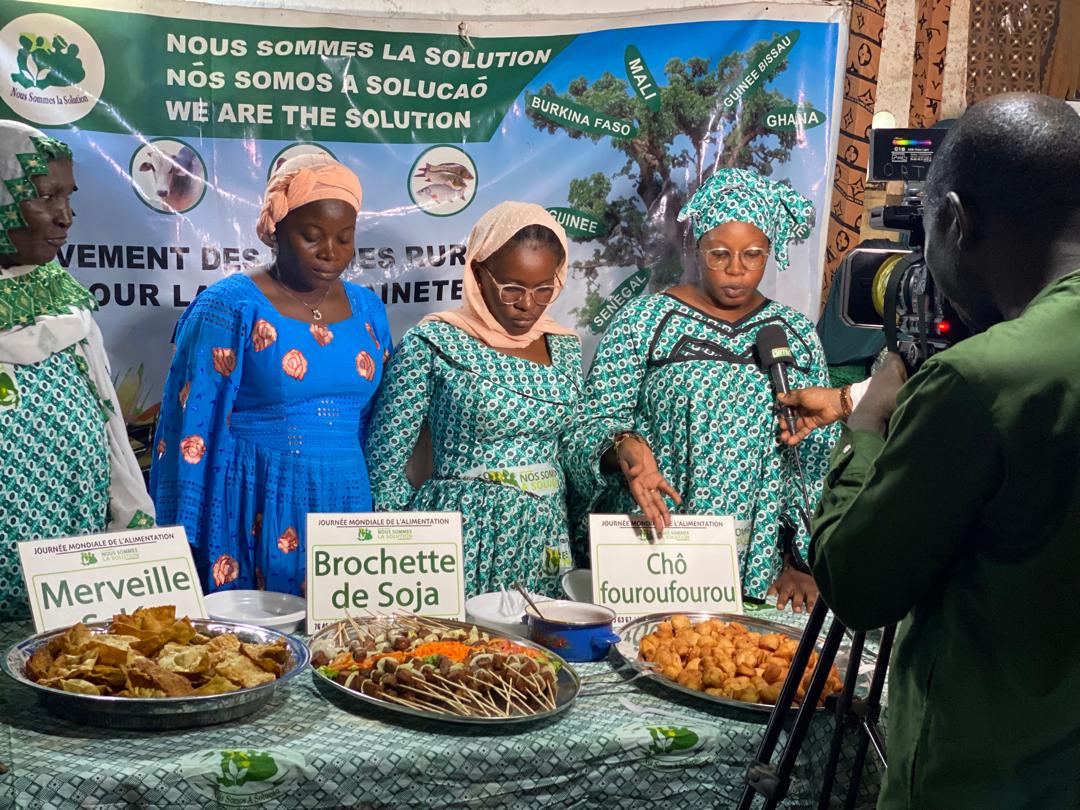
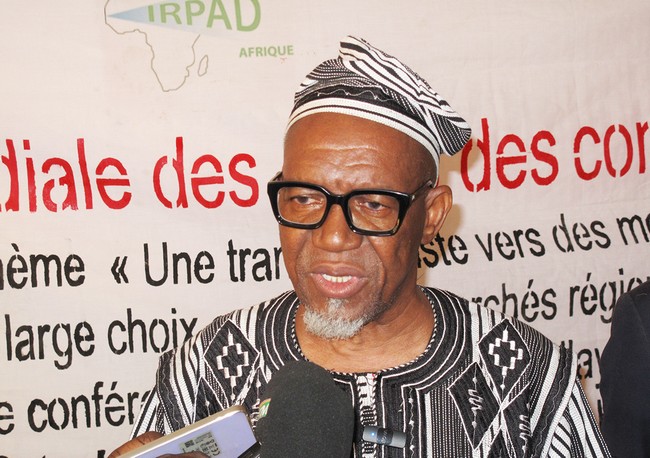
The Consumer Café is a space for dialogue and sharing around a topical issue: boosting the consumption of local rice, specifically sustainable rice. Our ambition is to demonstrate that rice produced in Mali is healthy, traceable, of good quality and capable of meeting our needs.
The agroecological SPG market launched by AMSD and Humundi is a place where residents of Bamako can buy organic food and learn about sustainability. Children, accompanied by their parents and teachers, for example, learn about the benefits of sustainable practices and the importance of consuming pesticide-free products. Rikolto supports this market and AMSD by promoting sustainable rice practices among producers and the commercialisation of their produce.

Since 2024, ASCOMA, with support from Rikolto and Slow Food Mali, has organised these cafés twice a year, bringing participants together to experience firsthand – and with their palates – the flavour and quality of locally produced, sustainable rice. The events are amplified through television, radio, digital platforms, and national newspapers, with the aim to extend the conversation far beyond the restaurant’s walls to the local community. An image that echoes the words of Mahamadou Kouyaté, townhall mayor of District Three: “The community plays a vital rolein both the production and consumption of cereals. We should adopt consumption behaviours that contributeto our well-being.”
The community plays a vital rolein both the production and consumption of cereals. We should adopt consumption behaviours that contributeto our well-being
Mahamadou Kouyaté, townhall mayor of District Three
These small and larger initiatives share a common goal: to strengthen the choice of local and sustainable rice, ultimately fostering more vibrant dynamics and competitive local value chains.
2025 was an exceptional year for many West African countries in terms of production. In Senegal, Mali, and Burkina Faso, stocks held by farmers’ organisations are full, and much of the produce remains difficult to sell. In a circular issued at the end of February, the Prime Ministry of Senegal invited all government ministries to prioritise local rice in their purchasing plans.
While efforts to expand local, and especially sustainable, production continue, creating opportunities for local rice is becoming central to forward-looking, resilient government strategies, as well as to the agendas of civil society and private actors. Changing consumer behaviour is a slow process that requires coherent action across multiple stakeholders. At Rikolto, while we work on our new 2027-2031 strategy, this means deepening the integration of these initiatives among our programmes and strengthening synergies with current and future partners.
At the heart of it all is a simple vision: to ensure that the joy Confucius spoke of is felt by the people who grow and process the rice, as well as the children and families who eat it.
Revised by Selene Casanova, Catur Utami Dewi, Michel Tougma and Bréhima Dembele.

.jpg)

.png)
.jpg)

.jpg)