

.jpg)
In the heart of Hanoi, nestled between tall buildings and bustling streets, a small oasis of green has recently appeared. This school year, the very first school garden has grown in the playground of Nam Trung Yen Secondary School. The playground has been transformed into a place where students learn where good food truly begins.
The school garden is a unique space where students learn about nutrition and health through hands-on activities.
The model is based on a closed-loop system: students see how kitchen and garden waste becomes food for plants. This way, they understand organic farming in a very natural way. - Duong Thu Hang, Rikolto's Good Food at School project coordinator in Vietnam.
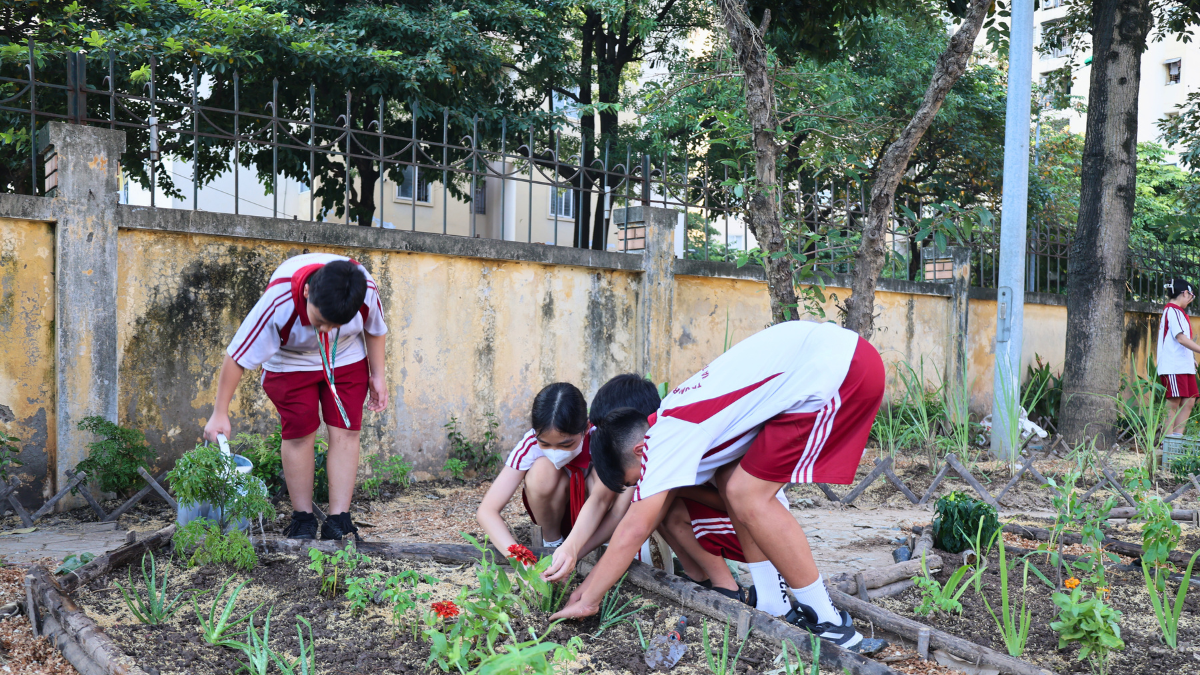
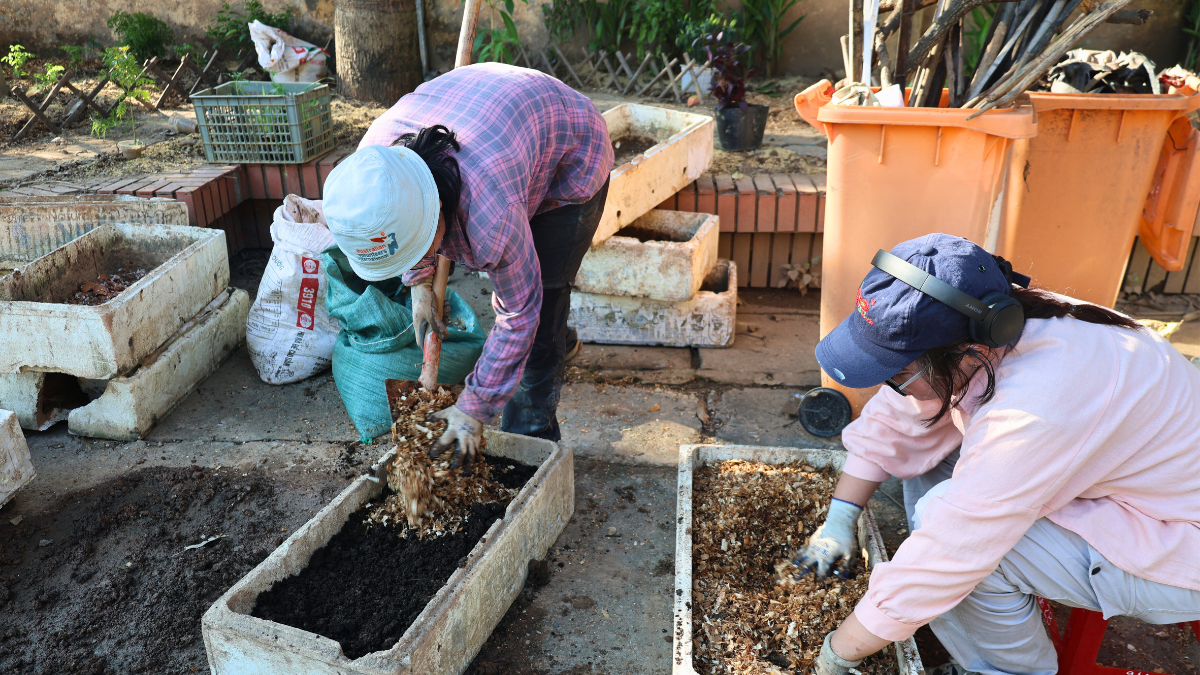
The garden is the result of months of collaboration and consultation between the school, the Center for Development of Community Initiative and Environment (C&E), and the Awe project, a local design agency. What began as a small idea in 2024 slowly grew into a 78-square-meter garden. A green learning space with raised beds, paths made of recycled bricks, a compost corner, and a sturdy recycled iron frame that simultaneously supports plants and offers students a green space to relax. Sustainability is reflected not only in the plants but also in the old gardening materials that have been given a second life.
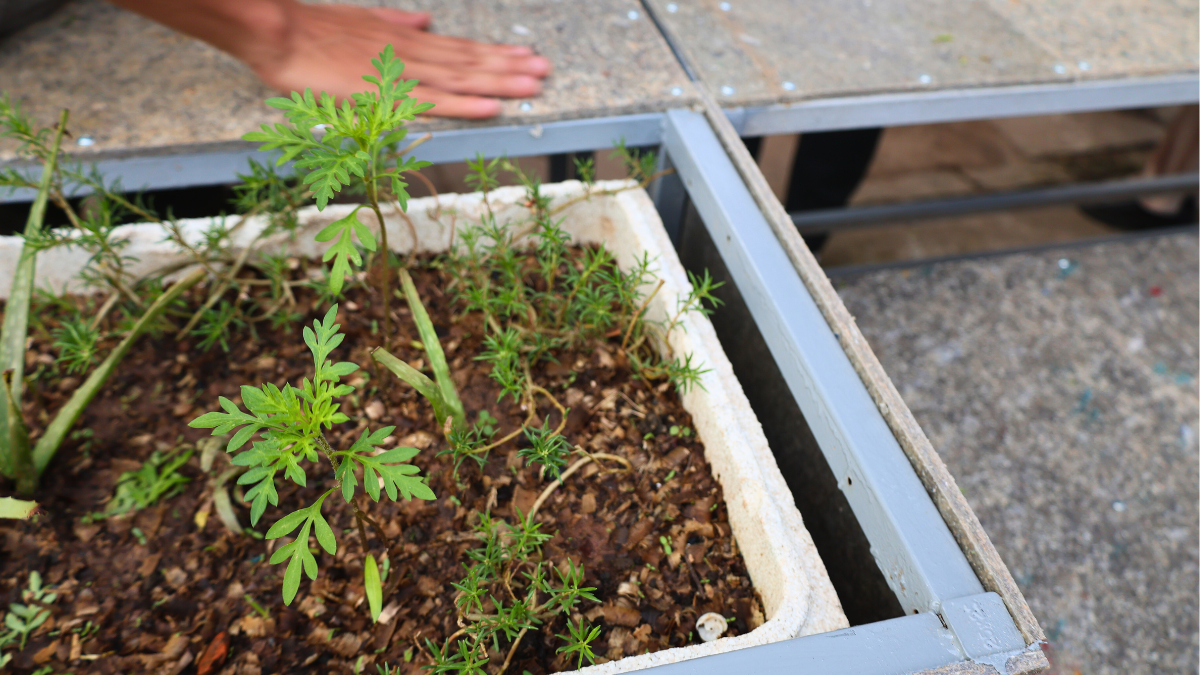
Today, over 40 varieties of plants are already growing there: vegetables, herbs, flowers, small fruits, and shade plants. It's the perfect place to bring the lessons outdoors.
The Nam Trung Yen school developed a ten-week learning program ("I Am a Small Farmer"), where over 300 students learn about plants, compost, healthy eating, and teamwork. They observe, measure, draw, photograph, and record everything in their garden journals. This makes science tangible, and they discover all the meaning of nature at a young age.
During the garden's construction, it wasn't just the teachers and students who helped. Parents also rolled up their sleeves and brought plants of their own. For many students, gardening felt unfamiliar at first. In the densely populated city, nature is generally scarce. Now it's a place of connection for all the students. They learn not only about biology and nutrition, but also about care, time, and respect for living things.
For Bui Thi Thanh Thuy, director of C&E, the garden is more than just a nice initiative. "Green spaces are disappearing in densely populated cities. Here, students learn to see the world as a whole, understand sustainable development, and appreciate every meal a little more. By reusing materials and making compost, they learn that simple things can make a big difference," Thuy emphasises. "By scaling up these kinds of models, schools can become green learning spaces that foster sustainability and creativity."
Even after school, students enjoy spending their free time in the garden. "At home, I grow some plants on our balcony," says one student, "but here I can learn about many more varieties. I hope to one day even harvest chili peppers here with my friends." The school administration sees the garden as a new chapter in their educational approach. "After the transition, we will collaborate with our science and technology teachers so students can use the garden during lessons."
The garden's harvest is modest for now and not yet sufficient for full school meals, but one garden is planting the seeds for many others. A teacher from a neighbouring school has already expressed interest in starting a similar program there.
The school programme therefore aims to go beyond individual schools. Together with local governments, educational institutions, and our partners, Rikolto is building a structural model that integrates healthy eating, environmental education, and waste management. Nam Trung Yen's garden demonstrates what this can look like in practice: a place where theory and practice converge, where students learn by doing, and where good food becomes part of a good education.

As in Vietnam, Rikolto is putting forward Good Food at School (GF@S) projects in eleven countries: Belgium, Burkina Faso, the Democratic Republic of Congo, Ecuador, Indonesia, Peru, Rwanda, Senegal, Tanzania, and Uganda.
In every country, although the practices are adapted to people’s needs in their communities, the goal remains the same: to ensure that every student has access to nutritious, safe and sustainable food.
And how that food will arrive on those plates can be a story of knowledge, policy and broad support. And even more: with the collaboration of diverse people's needs and expertise who believe in it.
As of March 2025, Rikolto’s Good Food at School interventions have reached:
.png)
Photos by Vương Tuyết Nhung, Communications Coordinator at Rikolto in Vietnam. This article was first published in Dutch on Rikolto’s website and has been slightly edited for a global audience.
.png)
.jpg)

.jpg)