
Every morning, thousands of residents walk through the main traditional food markets in Mbeya, a city located in southwest Tanzania. In the crowded lanes of these open-air markets, transactions are happening for what feels like seconds. These exchanges sustain the livelihoods of many people running micro and medium-sized businesses, such as farmers, transporters…. But today, we'll focus on the vendors, those who sit or stand next to their stalls, usually looking almost "too eager" to sell you everything they have.
.png)
Sokoine, SIDO, Darajani, Igawilo, and Soweto are the places of work - according to their market leaders- for approximately 635 vendors selling fruits, vegetables, and staple foods. In a city with an urban population of 649,000 in 2023, these vendors carry the role of supplying food and generating income for many households.
However, they arrive before sunrise at their place of work to face constraints such as limited space, minimal or precarious physical conditions, and intense competition, since often they are selling similar products just side by side. And they do all of this with almost no formal training in business or safe food handling practices.
.png)
Since 2022, Rikolto has been working with the Mbeya City Council and other organisations on the Mbeya Food Smart City Platform. The multistakeholder group, co-facilitated by Rikolto, brings together NGOs, agrifood businesses, government departments, and farmers' organisations to work on how to incentivize safer, better-quality fresh fruit and vegetables in Mbeya and its neighboring areas.
Over the years, it has become a space for collaboration on improving market infrastructure, strengthening direct farmer–vendor relationships, and exchanging knowledge with other urban centres.
One of the projects coordinated by Rikolto through the platform is a Participatory Food Safety System (PFSS), in place since 2023. Most food safety systems operate only up to the farm gate. The PFSS extends this logic all the way to the market stall, connecting farmers, vendors, and other actors in a mutual validation system where each part of the chain is accountable to the others.
The focus of the PFSS is on safe production, safe food handling, and, more recently, on marketing practices that reinforce food safety at the point of sale.
Take Igawilo Market as an example. In mid-2024, vendors there received around 9.2 tonnes of vegetables every week. By early 2026, that had risen to 11.3 tonnes, enough to cover the weekly vegetable needs of approximately 150 to 180 additional families. Produce now comes from Tukuyu, and Mbeya, and during shortages, from Tanga and neighbouring country of Malawi.
By 2024, 540 market stalls, 136 in Soweto in 404 Igawilo, had been upgraded through a co-investment process between vendors and the city, with the purpose of improving the physical conditions for better food handling. In parallel, 412 farmers strengthened safe food practices, and 387 vendors built more structured relationships with their suppliers in 2025.
Yet, a question, not only from the vendors, remained: does any of this translate into a higher income? Will customers actually pay attention to whether food is safe? In Mbeya, vendors reported attracting more customers as a result of improved food handling practices. Whether this translated into measurable income growth is something that the team behind will track in its next evaluation.
.png)
That question led Rikolto and partners to organise an “Inclusive Market Training Programme”. The core idea was that the way a vendor presents their products is not separate from guaranteeing food safety. A well-organised stall, clean displays, and visible pricing are not just good for business. These practices can contribute to reducing contamination, help to build customer trust and keep produce fresher for longer.
The Rikolto team worked alongside Johan de Visser of Africa Business Coaching, following their learning-by-doing methodology. Sessions were supported by a pictorial manual in Swahili, developed and translated by the Rikolto team, ensuring concepts were accessible to all participants, regardless of their literacy level.
The first part of each day introduced concepts such as product grouping and arrangement, hygiene standards, price visibility, stall organisation, and use of space. The second part took vendors directly into their stalls to apply what they had learned.
The training brought together 40 vendors, 23 women and 17 men, from the five main markets across Mbeya, over five days in April 2026.
.png)
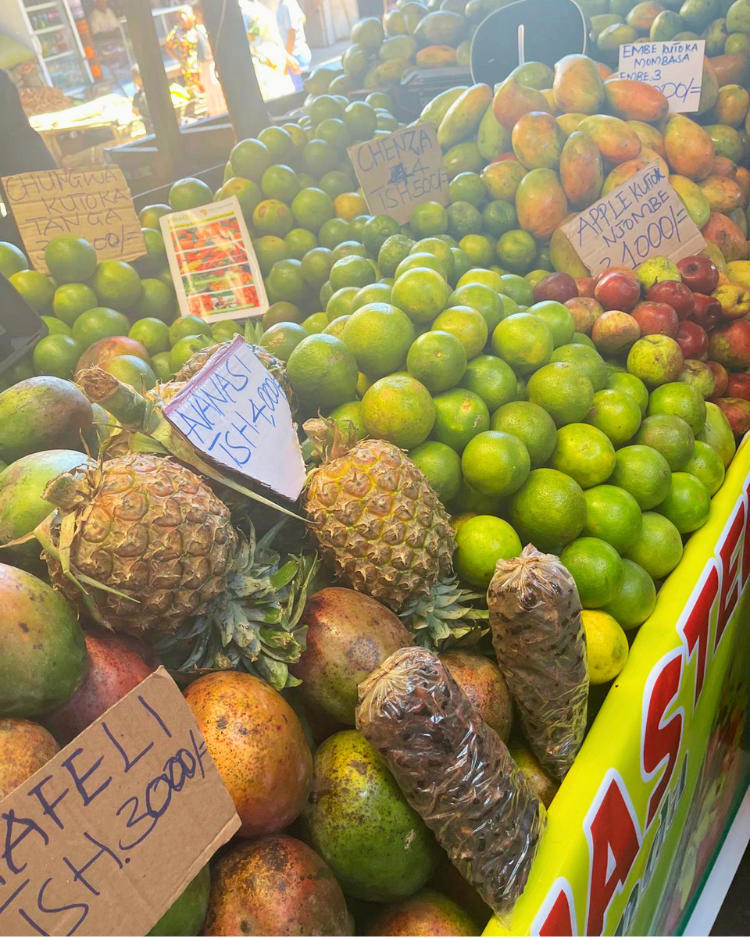
Walk into any of Mbeya's markets on a busy morning and the picture is familiar to anyone who works there. The image of produce piled up, space running out and customers and everyone just moving too fast.
During the training, vendors worked directly on those details, raising produce off the ground using crates and raised surfaces, separating fresh items from spoiled stock, reorganizing their stalls for easier customer movement, and making prices visible and clear.
“I used to focus only on selling quickly. Now, I understand that how I display my products can either protect or damage my business.” - Rehema Kyando, vendor selling tomatoes and onions at Igawilo Market.

The training did not only bring in vendors. Three agrifood businesses also took part, Mulungu Enterprise, Huno Enterprise, and Mboga Na Matunda, all previously involved in Generation Food, an agribusiness incubator co-designed with Rikolto and local partners to incentivize innovation in the sector.
Their presence reflected something central to how Rikolto approaches food systems: change is more likely to happen when different parts of the chain “learn & lean” together.
Ms Consolatha Moshi, founder of Mboga na Matunda, operates as both farmer and retailer. During one session, she shared her experience of managing the time between harvesting and selling, a pressure that intensifies during rainy seasons. Her talk gave vendors a more nuance idea of what happens before produce reaches their stall.

The training integrated Visual Merchandising, Business Model Canvas Development, Supply Chain Management, and Professional Customer Service, a set of concepts commonly applied in formal business settings, and here it was adapted for vendors working in contexts of low literacy and informality.
Using the Business Model Canvas as a framework, the workshop guided them through a question: how do you create value for your customer, and how do you structure your work to deliver it consistently?
In a fresh produce market, the answer comes down to freshness, moving produce from farm to stall quickly, with as little handling and delay as possible. The methodology encouraged vendors to consider that achieving this depends heavily on coordination with farmers, transporters, and fellow traders.
They were also introduced to customer service practices, exploring practical ways to go beyond the transaction: offering convenience, handling complaints professionally, and turning a dissatisfied customer into a returning one.
The intention is that this training translates into enhanced profitability, greater market competitiveness, and more sustainable livelihoods for participating vendors.
Our training team could see immediate changes in the group just by looking at their stalls. Three people stood out for how they applied what they had learned: Boniface Mwakalobo at Sokoine, Aidan Chanya at Soweto, and Bahati Mwankusye at Igawilo. They received an award that recognised them for cleanliness, arrangement, customer engagement, and willingness to try something new.
Also, the 40 participants received a certificate of completion describing their newly acquired skills in visual merchandising, hygiene, and customer service.
Relevant to the process was that, before the training, participants had already contributed USD 35 each, covering approximately 40% of the costs of upgrading their selling spaces in Igawilo and Soweto.
.png)
In Mbeya, the city authorities have been taking tangible steps to improve food safety in their public food markets. For the closing event of this programme, the Mbeya City Mayor attended .
Also, as part of the different interventions promoted by the Mbeya Food Smart City Platform, the 2026 city budget has allocated USD 554,988 for food safety improvements and the renovation of markets across the city. And, a new market is under construction at Soko Matola, and the City Council has contracted a dedicated service provider for market cleaning, moving from ad hoc management to a structured system.
Mbeya has also officially signed the Milan Urban Food Policy Pact, an international agreement among over 300 cities committed to building food systems that are safe, inclusive, and sustainable. The signing ties food system transformation to the city's 2025–2029 urban development strategy.
.png)
This story was edited by Selene Casanova, communications coordinator at Rikolto, with select editorial processes supported by AI tools.

.jpg)

.png)
.png)
.jpg)


.jpg)