
During the Week for Good Food, an initiative organised by Rikolto in Belgium and taking place from 9 to 18 January, we're spotlighting people who are making the right to good food a reality. In Leuven, a mid-sized city in Belgium, that person is Michael Moulaert, coordinator of Kort'om Leuven, a farmers' cooperative that brings local agriculture and urban consumers closer together. What began as an idea within Rikolto has grown into a solid logistical link between farmers and Leuvenese consumers.
Rikolto supported the initiative and coordination of the platform during its early phase, with the aim that Kort’om Leuven would ultimately operate as a locally governed cooperative embedded in the city’s food system.
Kort'om Leuven was founded in 2020. Its goal? To fill a simple but significant gap: between the many farmers in Flemish Brabant (the region surrounding Leuven in Belgium) and the growing demand for local products from shops, schools, restaurants, caterers, and city services, there was no intermediary. A short supply chain means direct or near-direct links between producers and consumers, reducing intermediaries, costs, and emissions.
"We ensure that farmers can deliver their products to one location and that customers can order their products from one location and receive them in a single delivery," says Michael. "It sounds simple, but it makes a world of difference."
The cooperative bundles orders, organises logistics, and ensures a consistent supply: farmers complement each other and step in when a colleague is temporarily without produce. "This way, we can supply not only larger supermarkets, but also restaurants and schools, which often need small quantities."
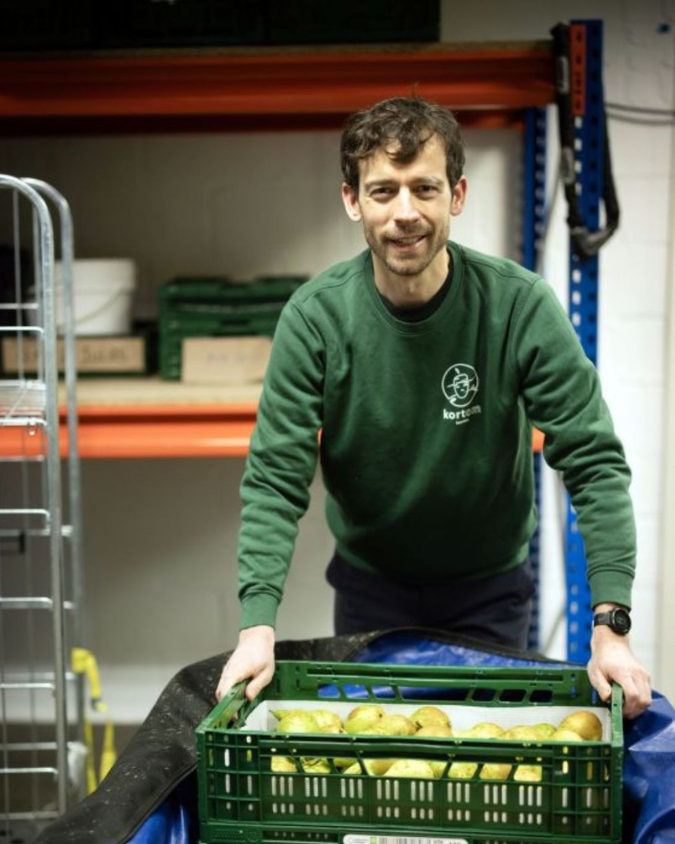
“We ensure that farmers can deliver their products to one location, and that customers can order their products from one location and receive them in a single delivery.”
A strong network has grown from the weekly distribution. Farmers get to know each other better, customers organise dinners on the farm, and new partnerships are forged. "We love working with customers who, like us, are passionate about sustainable food," says Michael. For example, Kort'om supplies vegetables to Foodatelier César, a catering provider, which prepares hot meals for schools in Leuven. "They adapt their menus to what we can offer and encourage us to seek out new products and producers. That's partnership."
In short, when selecting producers, they consider not only quality but also sustainability: organic, regenerative, soil-friendly, closed-loop systems, and fair working conditions. The initiative also strengthens the local community economically by collaborating with local suppliers. For example, fruit is delivered to eleven city services through Urbike, a cyclo-logistics cooperative that improves the city's quality of life by offering bicycle courier services.
Kort'om Leuven's success is also a result of the City of Leuven's progressive food policy. In its food strategy, Food Connects, the city formulated its ambition to strengthen the short supply chain, including by supporting a logistics platform.
"The City of Leuven was not only a partner from the start, but also a shareholder and customer," says Michael. "They involve us in initiatives related to school nutrition and incorporate sustainability criteria into their tenders, which also gives short supply chain initiatives more opportunities. That really makes a difference."

Do you want to learn more about how this story took shape? Read it here!
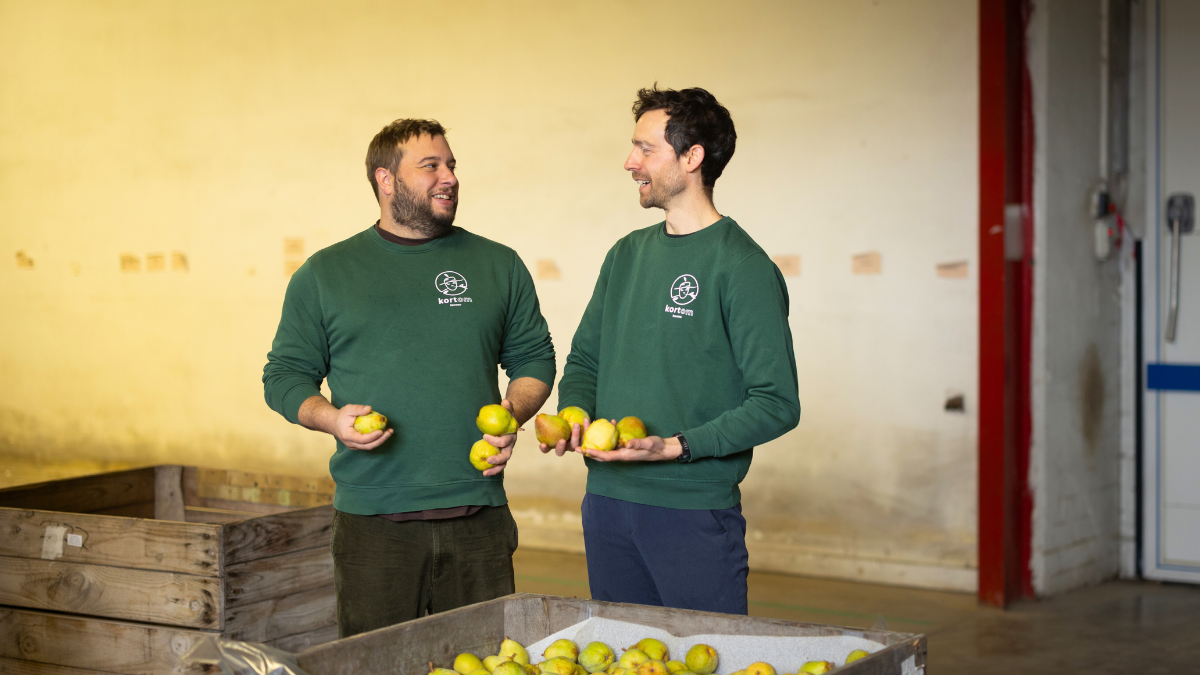
Kort'om Leuven's ambitions remain high. The cooperative wants to further expand its fruit and soup offerings for schools, strengthen its vegetable offerings for the hospitality industry, and incorporate new artisanal products. Michael also sees significant opportunities in collaborating with other partners in the food system to make the entire supply chain more sustainable.
Michael found an inspiring example in the Walloon region (the French-speaking southern part of Belgium), in a cooperative Paysan Artisan. "Just like Kort'om Leuven, they organise joint distribution to customers. But they also invested in a shared kitchen where farmers can process their surplus produce. They have a washing station for reusable jars and even a small chicken slaughterhouse. Citizens are also shareholders, so the entire supply chain is represented."
Such a local collective armours us for the uncertain geopolitical context affecting food supply.
"By producing, processing, and investing more locally, we become less dependent on oil, packaging, and imported raw materials. This makes our food supply more resilient to external shocks."
Kort'om Leuven proves that good food starts with strong local collaboration and with people who dare to dream of a food system that works for everyone.
.png)
This article is an English translation of the original piece written in Dutch by Aissatou Diallo, Communications Intern at Rikolto. You can read the original version here: Kort’om Leuven maakt van goed eten een recht in Leuven.
Photo credits: Layla Aerts.

.jpg)