


Imam Black never imagined he would return to his hometown in Tanggamus after spending five years working in the city of Surakarta, Central Java. Like many young people from rural areas, he left home in search of better opportunities. However, working odd jobs made it increasingly difficult to make ends meet, let alone to save money for the future. Motivated by a desire to build a better future for himself and his family, Imam decided to return home to Tanggamus, Lampung, in 2019.
Tanggamus is a district located almost four hours from Bandar Lampung, the capital of Lampung Province. It borders Bukit Barisan National Park, and most of its residents depend on agriculture for their livelihoods. Cocoa has long been one of the area’s key commodities. However, many cocoa trees are ageing and have become more vulnerable to pests and diseases, which are appearing more frequently as a result of climate change. At the same time, farmers face limitations in expanding their land, as cutting down forests is prohibited in conservation areas. As a result, increasing production can only rely on sustainable intensification rather than land expansion.
.jpg)

The Climate-Smart Cocoa Farming among Smallholders for Ecosystem-Based Adaptation (CCAM) project was designed to respond to these challenges. The project aims to improve community welfare, particularly for farmers, by introducing climate-smart agroforestry practices that support local ecosystems. CCAM also opens up economic opportunities for women and young people in agriculture and plantation sectors. Funded by CISU and implemented by Rikolto together with Preferred by Nature (PbN), we work with 3,000 cocoa farmers and 500 women and young people in Lampung.
For Imam, the CCAM project marked a turning point. After returning from working away, he initially worked as a produce motorcycle courier, transporting farmers’ harvests from his village to different parts of Lampung.
Over time, however, he realised that his income as a produce courier was limited. He began to see the opportunity to earn a better living by becoming a farmer himself, especially as he had a relative who owned land and offered to work with him through a sharecropping arrangement. The challenge was that Imam had no prior knowledge of cocoa cultivation.

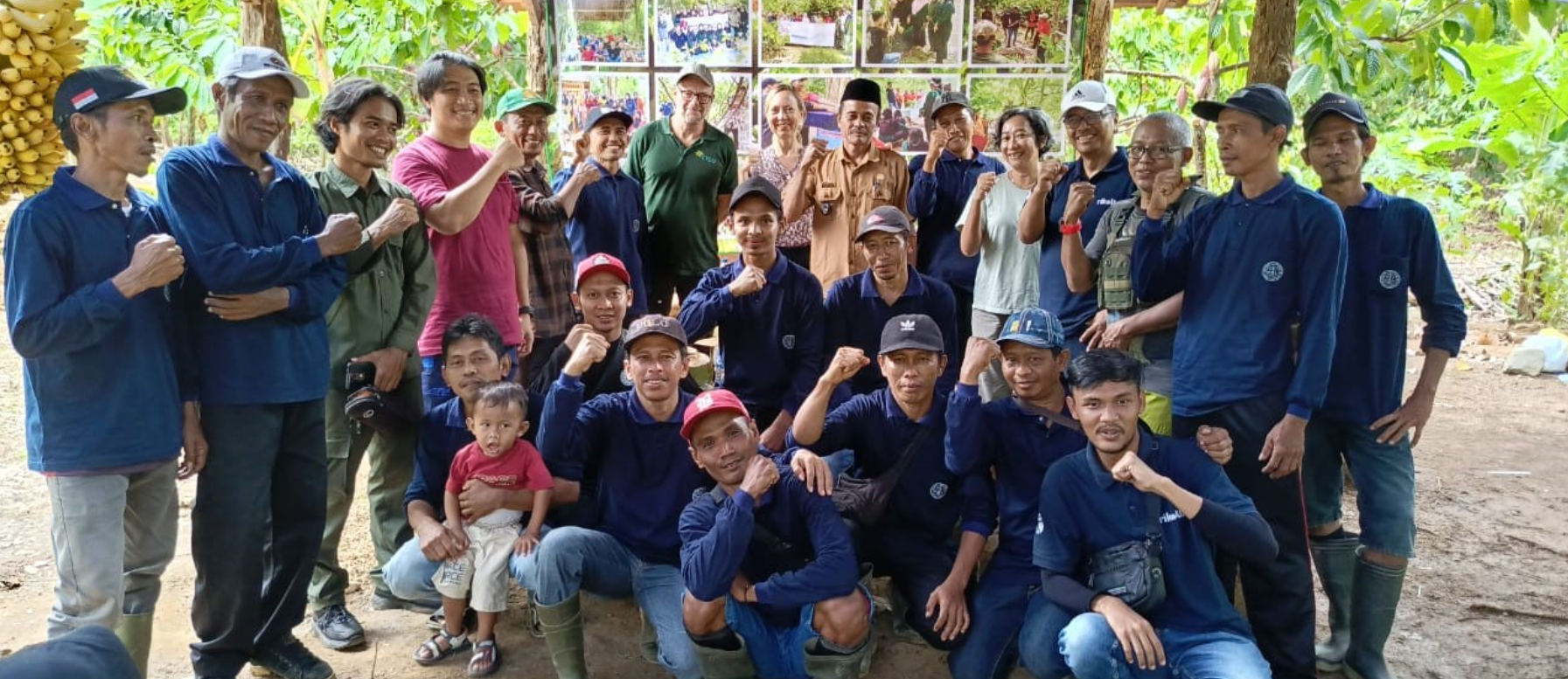
Joining the Lantana Forest Farmer Group (KTH Lantana) became a crucial step in his journey. Members of KTH Lantana, a partner of Rikolto under the CCAM programme, received training on sustainable agroforestry practices applied to cocoa cultivation. As a young farmer who was still learning, Imam immediately applied the knowledge he gained to his own plot. Support from fellow group members encouraged him to continue learning and developing his farming activities.
His efforts soon began to pay off. The cocoa trees he planted gradually started producing. While some of the trees on his land are still undergoing rejuvenation, in 2025 Imam earned IDR 12,000,000 (approximately USD 720) from selling semi-wet cocoa beans, despite a period of declining cocoa prices. This income highlights the potential for higher earnings once his cocoa garden becomes fully productive and is supported by improved post-harvest handling.
Imam is not the only young farmer in his group. Global trends in the cocoa industry have encouraged more young people from Tanggamus to return home and take up farming. Equipped with experience gained from working away and a strong willingness to learn, these young farmers are helping to drive change at the local level.
“In KTH Lantana, most members come from an older generation of farmers who have grown cocoa for decades using traditional methods and may have doubts about adopting new practices,” said Eri, Head of KTH Lantana. “However, with young farmers like Imam joining the group, bringing enthusiasm and the courage to adopt newer cacao farming practices, we older farmers are also motivated to try and learn new approaches.”
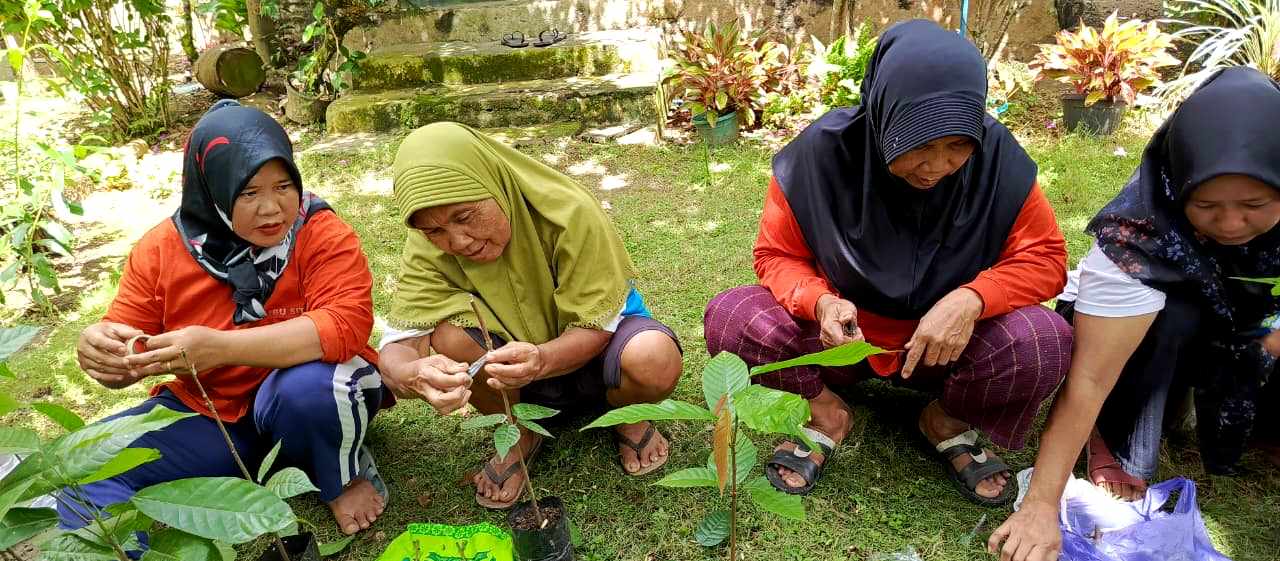
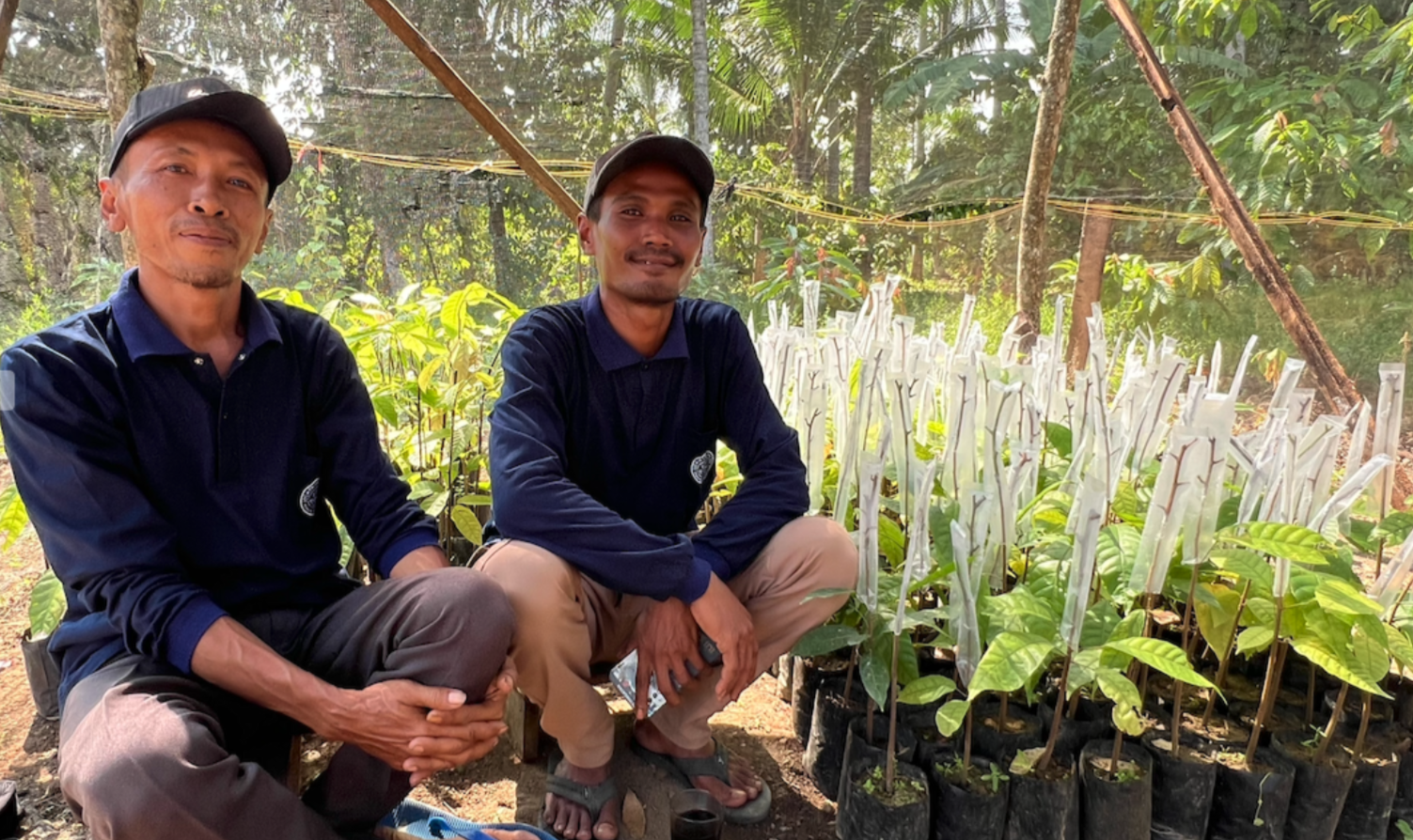
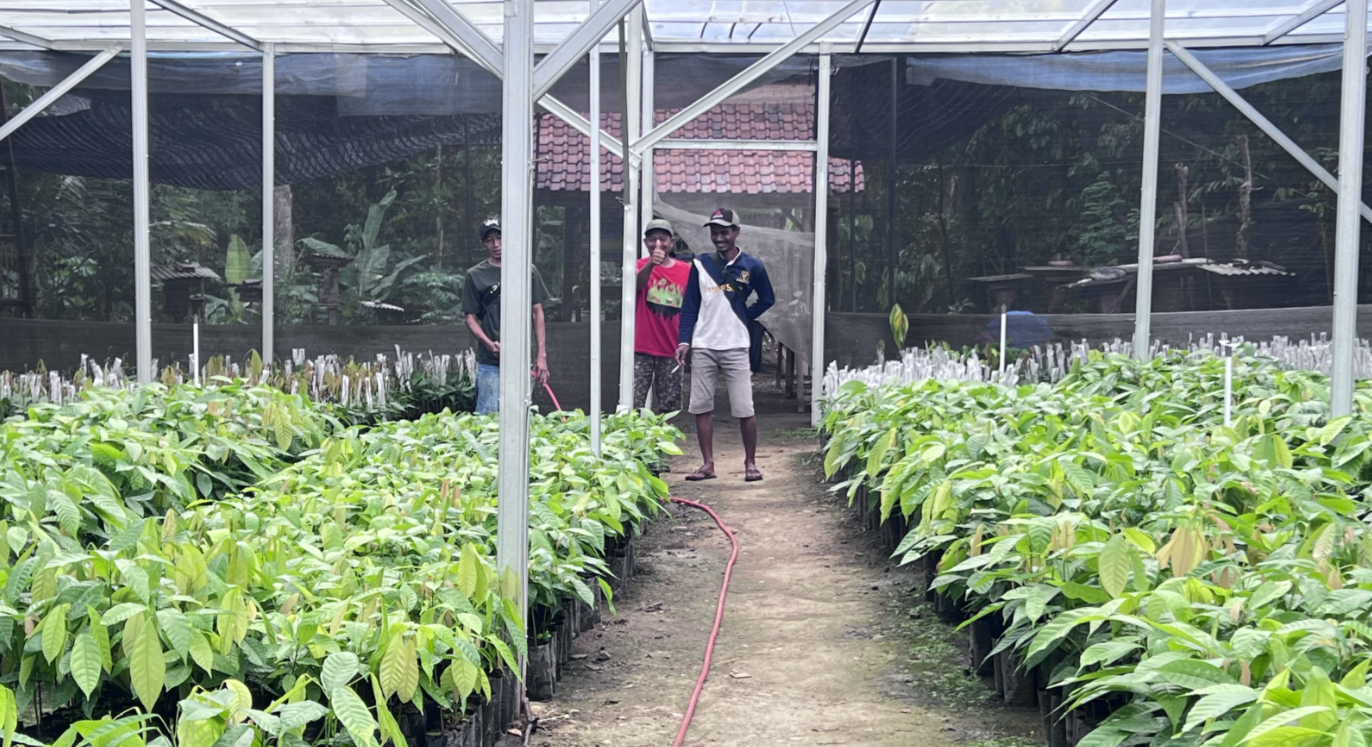
In addition to improving cultivation practices, KTH Lantana has also begun developing a seedling business, selling MCC02 cocoa seedlings that are more resistant to pests and diseases. With support from CCAM, selling seedlings has been development into one of KTH Lantana’s business units. To run the business, group members rent village land to establish greenhouses and use vacant land or home yards when space is limited. Seedlings are sold directly and through local agents, with buyers coming from other districts in Lampung and as far as South Sumatra. This activity provides additional income outside the harvest season.
Young farmers are also introducing new ways of accessing information and building networks through social media. Online platforms allow farmers in Tanggamus to connect with fellow cocoa farmers across Indonesia and even abroad. Imam regularly shares short videos about his cocoa farming activities on his Facebook account. He now has nearly 7,000 followers, including one from Cameroon in Africa. With the help of Google Translate, they exchange perspectives on regenerative cocoa farming practices applied by KTH Lantana and compare them with monoculture systems used in Cameroon. KTH Lantana has also launched an Instagram account to share updates on group activities, promote side products, and inspire other forest farmer groups, particularly in Sumatra.
After two years of working as a cocoa farmer, Imam has a clear message.
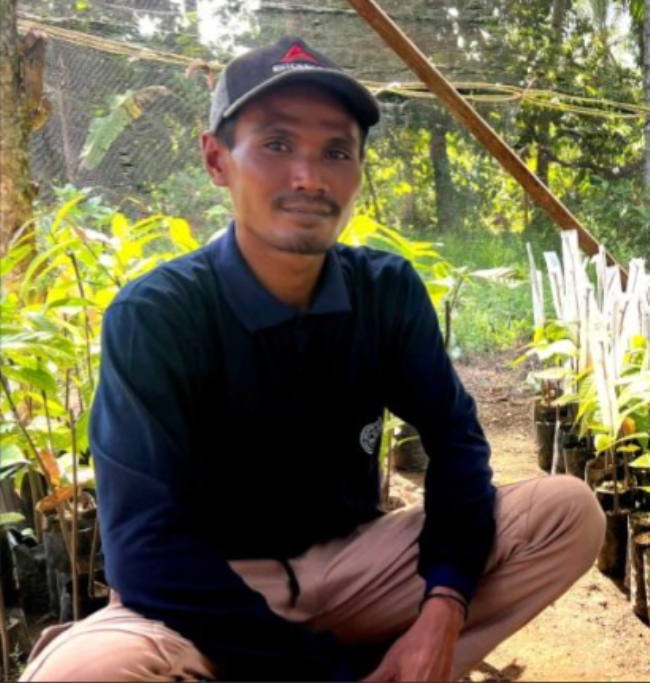
“For me, farming is very enjoyable, the idea that farming is dirty work or only for people on the margins is completely wrong. When it is done properly, farming can be deeply satisfying, both for yourself and for others.”

.png)
.jpg)
.jpg)