
Ibu Ratna moved to Depok 37 years ago from her hometown in Banten, Indonesia. Over the years, she has watched the place grow into an increasingly busy and crowded satellite city of Jakarta, the nation’s capital. The land around her home, once filled with fruit trees and food crops, has since been taken by buildings. Green and open spaces have steadily shrunk as the city's population grew.
"It feels like the weather in Depok keeps getting hotter. When I first moved here, we didn't need a fan at home, let alone air conditioning. Now it's unthinkable — the fan is always on whenever someone is in the house, just to get a little breeze and stay comfortable," says Ibu Ratna.
What Ibu Ratna feels is not just her imagination. Depok is one of Indonesia's most densely populated cities, home to 2.1 million people within an area of just 199 square kilometres. Over the past decade, green spaces have steadily given way to buildings and asphalt.
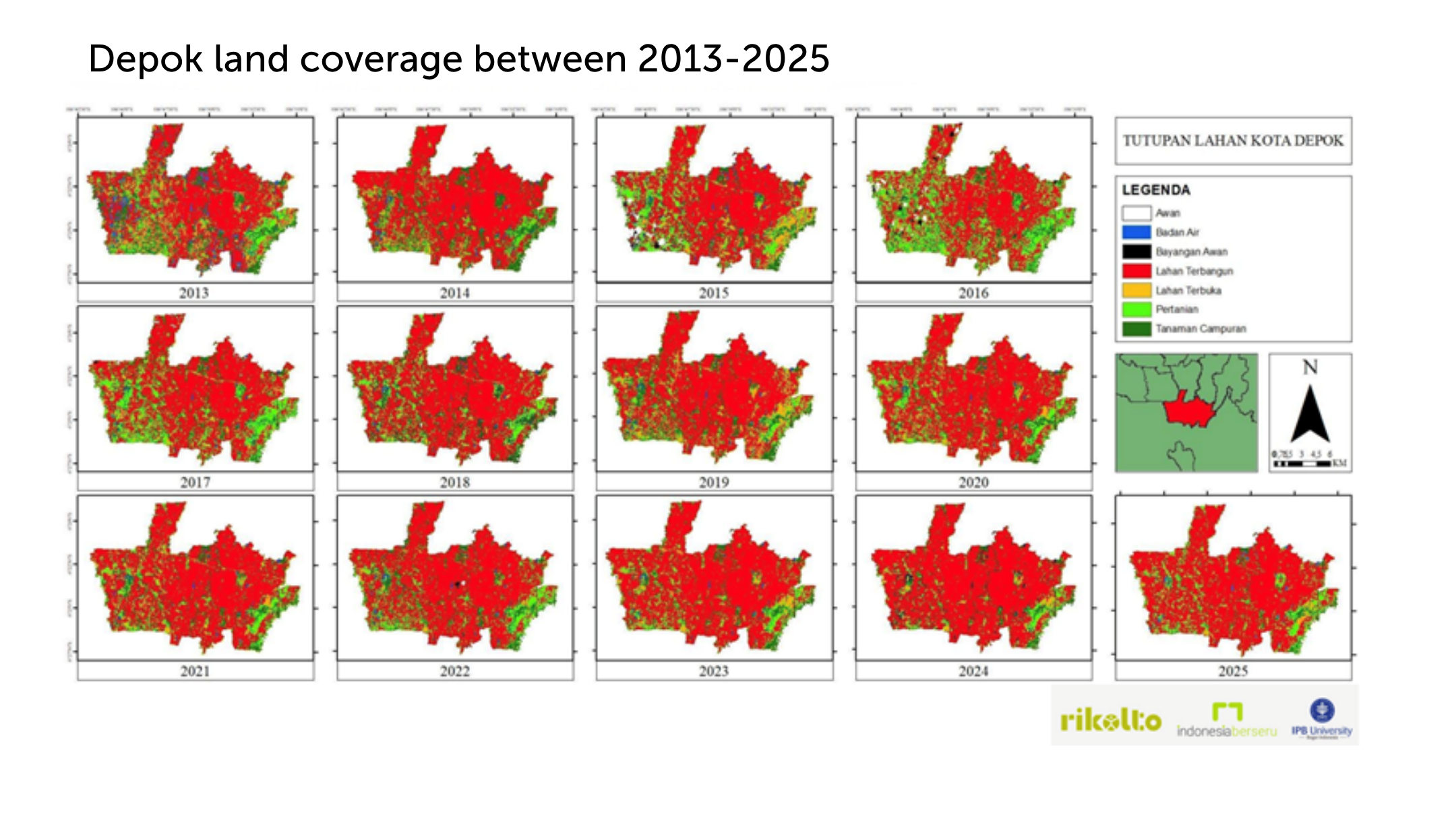
Depok is facing the challenges of rapid urban growth. As vegetative ground cover is replaced by heat-absorbing concrete and asphalt, city temperatures rise — a phenomenon known as the Urban Heat Island (UHI) effect. Satellite data shows that Depok's UHI footprint has expanded significantly over the past decade, and field measurements confirm that air temperatures across the city now consistently exceed normal ranges. Low humidity and weak air circulation make things worse, causing the city to heat up faster.
Beyond the heat, Depok also faces its own food supply challenges. According to Widyati Riyandani, Head of Depok City's Food, Agriculture and Fisheries Agency (DKP3), most of the city's food comes from outside the region.1 This leaves residents vulnerable to price spikes and supply disruptions. At the same time, there is no integrated data or information centre that stakeholders can draw on to address these challenges.
%202013-2025.png)
Since 2023, Rikolto, together with Bogor Agricultural Institute (IPB) and the NGO Perkumpulan Indonesia Berseru (PIB), has been working on a solution to the challenges facing Depok. Supported by the Government of Flanders through the Flanders International Climate Action Programme (VIKAP), the project Lowering the Heat, Feeding Citizens: Scaling Up a Circular Model for Urban Agriculture in Depok City set out to test whether urban farming, practised ecologically, could tackle both challenges at once: cooling the city and strengthening residents' access to healthy, affordable food.
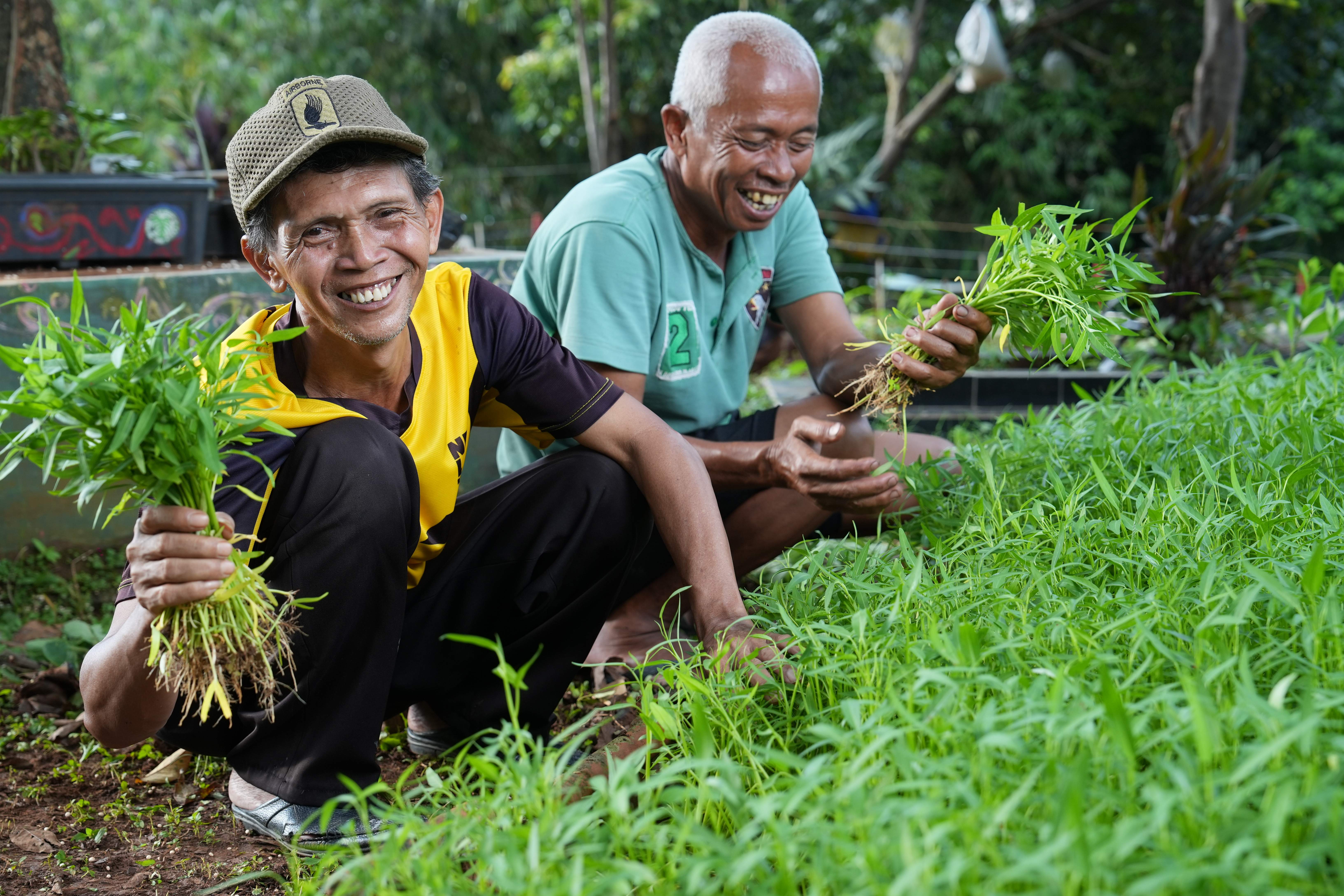
The project worked with six urban farming groups across Depok, engaging 166 farmers across 18,040 square metres of urban land. Most participants were not professional farmers — they were homemakers, community organisers, and workers who took up gardening out of personal interest or a desire to grow their own food.
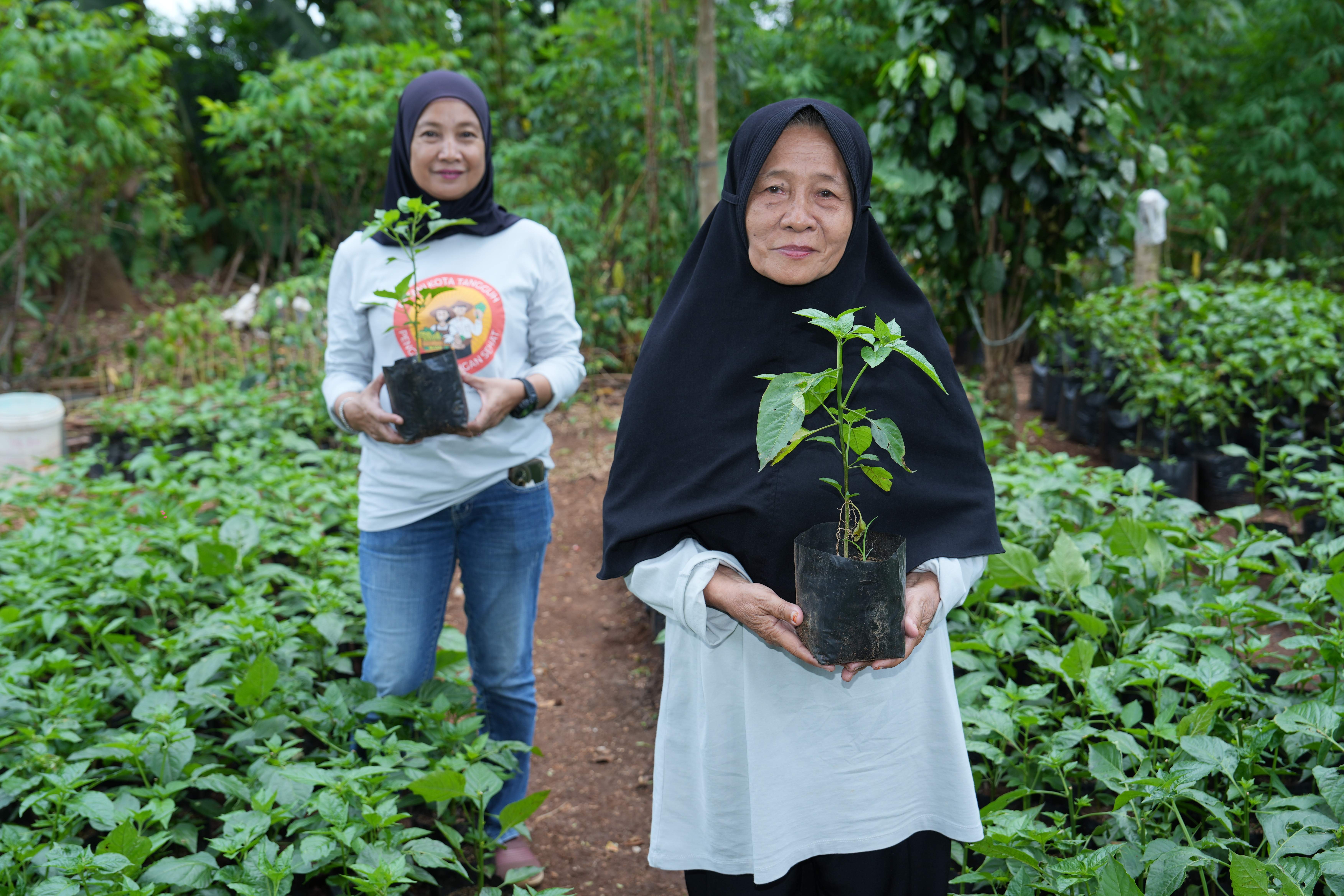
Ibu Ratna is one of the women who actively joined the project. It started with her leading gardening activities as part of early childhood education at the local nursery school (PAUD). A local community officer then invited her to form a women's farming group (KWT) to cultivate and make use of idle land in her neighbourhood. Together with 14 other women, Ibu Ratna founded KWT Sejahtera in 2023.
KWT Sejahtera's 700 m2 plot is tucked away at the end of a narrow alley in a dense residential neighbourhood. Behind rows of houses, concrete walls and parked vehicles lies a well-tended garden: neat rows of chillies, cucumbers, aubergines, and leafy greens, with a maggot cultivation unit at one end. It is all managed by women who, not long ago, had never imagined themselves as farmers.
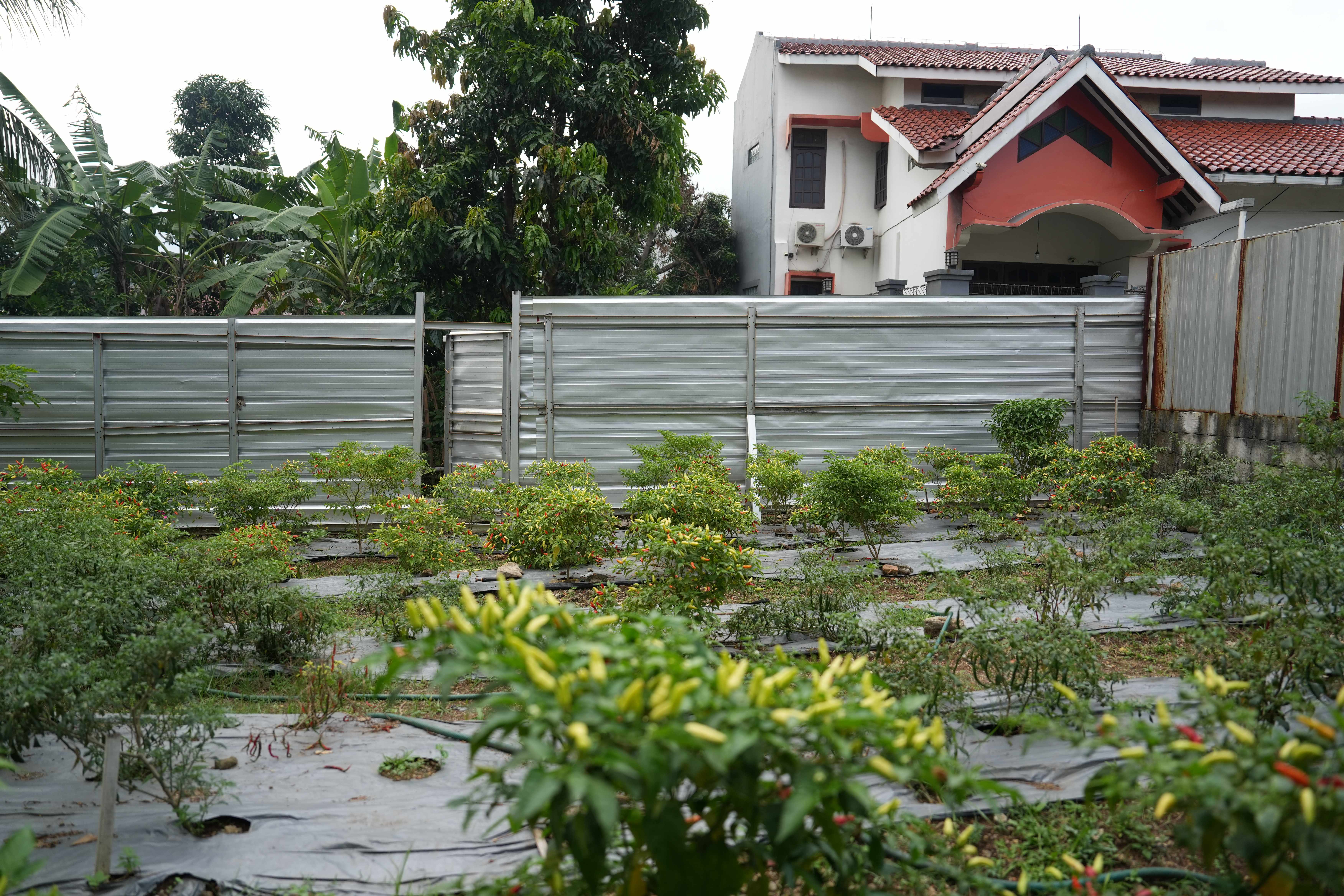
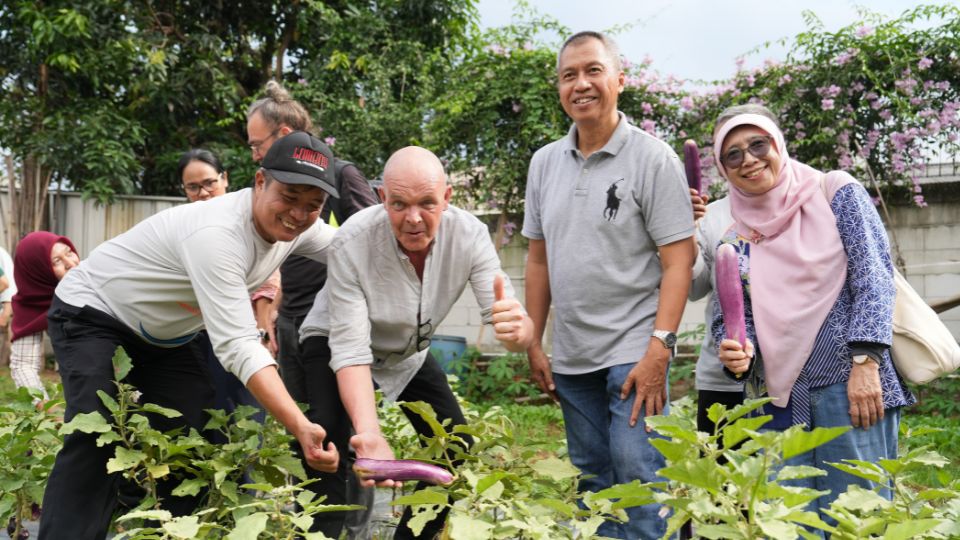
Through structured training and consistent on-site mentoring by IPB University, KWT Sejahtera and five other participating urban farming groups built real farming skills — from ecological soil preparation (working with the soil's natural biology rather than synthetic inputs) and compost-making from organic household waste to biological pest control and precision fertilisation. Most importantly, the entire approach is pesticide-free, producing food that is not only locally grown but genuinely safer to eat.
"It's wonderful to see the vegetables and fruits we've grown ourselves. Farming was something completely new for us, and we're grateful to have been guided by the experts from IPB. We learned the right methods and managed to get a real harvest. We were also taught how to make compost, so now we process our organic waste into fertiliser. We also raise maggots from food scraps collected from the local community and the nearby National School Meals programme kitchen, which we then sell as fish feed. The leftover maggot cultivation medium is then mixed into our growing medium as fertiliser," says Ibu Ratna.
To measure the effect of ecological urban farming on local climate variability, Automatic Weather Stations (AWS) were installed in each farming plot. The stations record meteorological data in real time —temperature, humidity, wind speed and direction, air pressure, and rainfall — helping farmers to determine planting schedules, manage fertilisation and pest control, and receive early warnings of plant disease and pest threats.

The findings from the project are promising. Research conducted by Dr. Idung Risdiyanto, climate researcher at IPB University, and the meteorology team from IPB University, who monitored conditions across six sites throughout the project period, found a modest but significant downward trend in average Diurnal Temperature Range (DTR) at urban farming locations between 2024 and 2025 — encouraging results for pilots of this scale - in direct contrast to the continued warming recorded at the Meteorology, Climatology, and Geophysical Agency (BMKG) Halim Perdana Kusuma reference station over the same period.
The Diurnal Temperature Range (DTR) is the gap between daily maximum and minimum temperatures. DTR declined across multiple sites, and the cooling effect was strongest during daytime hours — when heat stress on residents is at its highest. Measurements across five urban farming sites recorded an average DTR reduction of approximately 0.16°C.
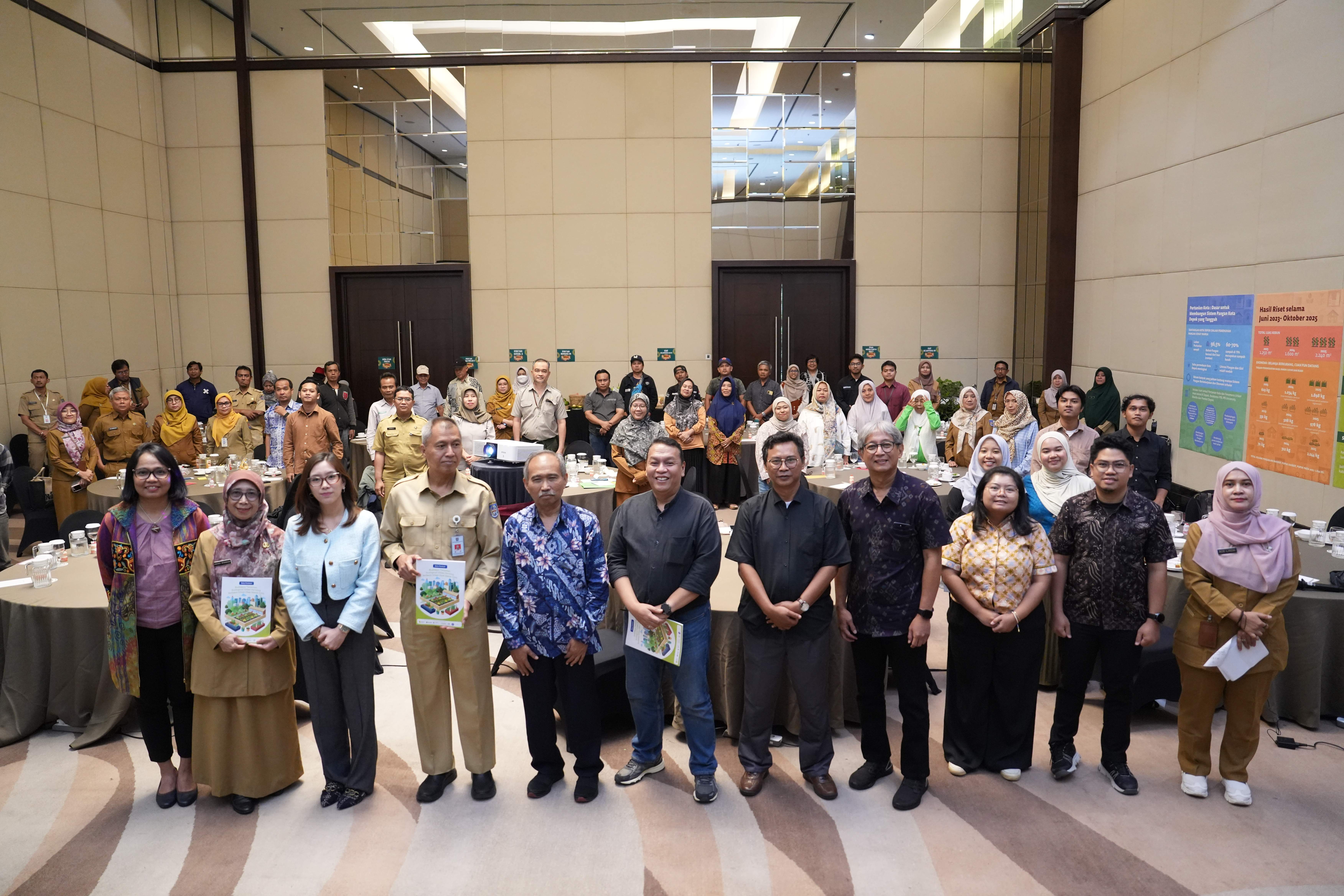
"If the diurnal temperature range increases, the thermal quality is not good. To illustrate, when you’re in a cold, air-conditioned room and suddenly step out into hot sun, your head feels dizzy. So, thermally, if the DTR rises, it’s not good for metabolism, both for humans and for plants. When we look at our urban farming demo sites, the trend in three locations is downward, and if it’s consistent, we hope it can reach a stable state. Notably, maximum temperatures have declined. The daytime heating effect can be suppressed with vegetation — in simple terms, there is a cooling effect during the day," said Dr. Idung Risdiyanto at the project's public dissemination session in December 2025.
Dr. Idung also highlighted the broader public health implications of these findings. "Based on references I have cited, DTR is associated with reduced incidence of stroke, cardiovascular disease, and obstructive pulmonary disease. However, these cases are largely documented in China and Australia, and I have not yet found research linking thermal changes in the environment to health outcomes in Indonesia," he said.
These results encouraged the Depok city government and PIB to begin mapping available land that could be optimised for urban farming across the city. An initial survey identified approximately 84 hectares of potential urban farming land. Using scientific references, the IPB University team estimated the carbon sequestration potential of urban farming plants. For example, bok choy has an estimated dry biomass potential of 3.1 tonnes per hectare and 0.15 kgC/m², while tomato reaches 5.2 tonnes per hectare and 0.24 kgC/m².
Based on the 84 hectares identified and the range of vegetables that could be grown, the IPB team estimated that areas with optimised vegetable production could sequester an average of 24.9 tonnes of CO₂-equivalent per hectare per year. While the carbon sequestration potential of urban farming requires further study, this project has opened new conversations about climate change mitigation through urban agriculture, enriching a policy landscape currently dominated by forest-based approaches.
Alongside field implementation, Rikolto's local partner PIB together with PT. Dasmap Indonesia, a youth-led start-up on data architecture and spatial analysis in Depok, developed a digital food system map for Depok city. This map is designed to integrate a food systems approach into city development planning. The map connects local food initiatives and strengthens territorial-based problem solving. For instance, closing the loop of the production, market, and food surplus and waste management, or layering the food system map with the specific food insecurity data in specific areas of the city.
The map has documented 147 farmer groups, 80 urban farming communities, 46 government-run and 11 non-government waste processing units, 9 food and agriculture education sites, 18 healthy food kiosks, and 4 food-sharing initiatives across Depok. The mapping exercise also identified significant potential land for urban farming expansion across 11 sub-districts in the city.
In December 2023, following a meeting between Rikolto's local partner and the Head of Depok's city development planning, the Regional Development Planning Agency (Bappeda Depok) committed to prioritising urban farming in the city's short-term development plan for 2025–2029. This has since translated into concrete action by starting to map the potential land to optimise for urban farming and scale-out this project initiative. In addition, the plan includes a budget allocation of approximately €15,000 per kelurahan (urban village) across more than 900 kelurahan in Depok, encouraged to be directed towards urban farming activities, as well as a "modern farming" programme for agro-edu-tourism. Rikolto's local partner PIB has been actively involved throughout this process, helping to shape how urban agriculture is embedded in the city's priorities.
Urban farming in Depok is not simply about growing vegetables. It is about building a city that can better withstand the pressures of a changing climate, feed its residents well, and bring its communities closer together. As Dr. Idung said at the project event in December 2025: "Let us plant. From a single plant, we not only harvest food for consumption, but also build cities that are cooler, healthier, and better prepared to face future climate and food pressures."
Rikolto continues to support the development of this circular urban farming model, partnering with city governments, research institutions, and the communities who are quietly, steadily growing affordable, healthy food in the underutilised spaces of the city.
---
With the support of the Flemish government



.jpg)
.jpg)