
Komida, a student restaurant of the University of Antwerp, has been firmly committed to sustainability since 2012. In collaboration with Rikolto, it then began a process to systematically make its operations more sustainable, a process that continues today. Step by step, Komida is evolving towards a menu that prioritises reusable materials, seasonal products and ethical choices. And it’s a hit.
During the Week for Good Food, an initiative organised by Rikolto in Belgium, we are putting in the spotlight practical models that make healthy, sustainable, and affordable food a reality. Join Komida’s efforts to contribute to the right to good food on the university!
.png)

For Komida’s customers, many of the changes are now so familiar that they are no longer noticeable. Disposable bioplastic packaging has been replaced by fully recyclable r-PET packaging. Cutlery is reusable, and water fountains reduce the use of plastic bottles.
In 2015, the crystal-clear ‘Cambio pot’ was introduced. This reusable container has since been replaced by the Vytal exchange system: a full range of bowls and coffee cups, available for rent via an app and free of charge for users.
The university canteen also makes consistent choices in its menu. Only sustainable fish varieties are served, seasonal vegetables are the norm, and the meat content has been deliberately reduced. Beef was completely removed from the menu in 2022, and the range of plant-based dishes has been expanding for years. Komida also strives to respect short supply chains by using only Belgian meat and quinoa sourced from a local farmer.
Since 2019, Komida has been an ambassador for Try Vegan, a campaign which organises a free challenge for people to eat vegan for one month. During that period, commercial kitchens are also being encouraged to offer more plant-based options.
.png)
Komida proves that sustainable food in a commercial kitchen is both feasible and impactful. The combination of reusable systems, fair trade, seasonal products and plant-based dishes significantly reduces its ecological footprint. Moreover, its clear ‘veggie’ and ‘plant-based’ labelling makes it easy for students and staff to make conscious choices.
The restaurant also chooses to limit the number of suppliers, thereby keeping its ecological footprint small.To combat food waste, Komida also collaborates with the Too Good To Go platform and provides controlled portion sizes. By actively focusing on sustainable materials and eliminating products with a high climate impact, Komida is sending a strong message: university restaurants can be a driving force for behavioural change and serve as role models for society at large.
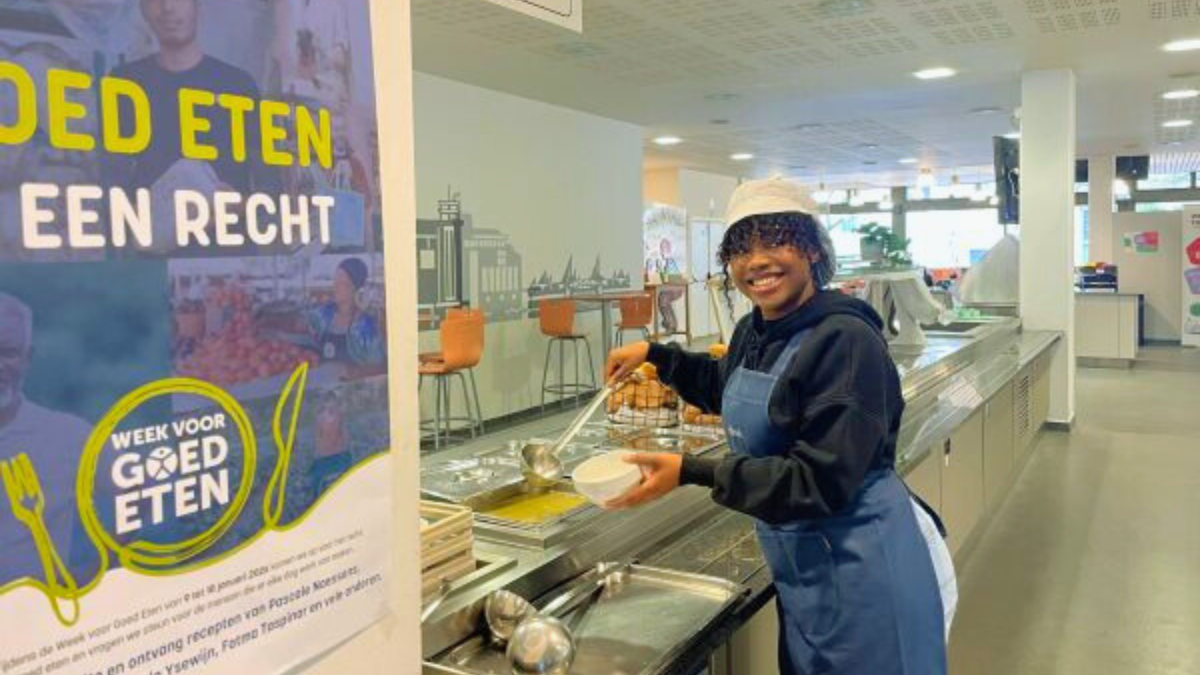
Komida continues to evolve into a restaurant where reusability becomes standard, plant-based dishes are a staple, and students are at the helm. This commitment is now growing thanks to collaborations such as the one with Delicia Kifu, a sociology student and ambassador for the Week for Good Food.
Together, they are launching a ‘recipes for good food’ campaign featuring Delicia’s plant-based Komida Bolognese. With this initiative, Komida hopes to reach not only students but also the wider university community. This is another step in a journey that, for over a decade, has shown that sustainable food on campus can be not only possible, but also inspiring and connecting.
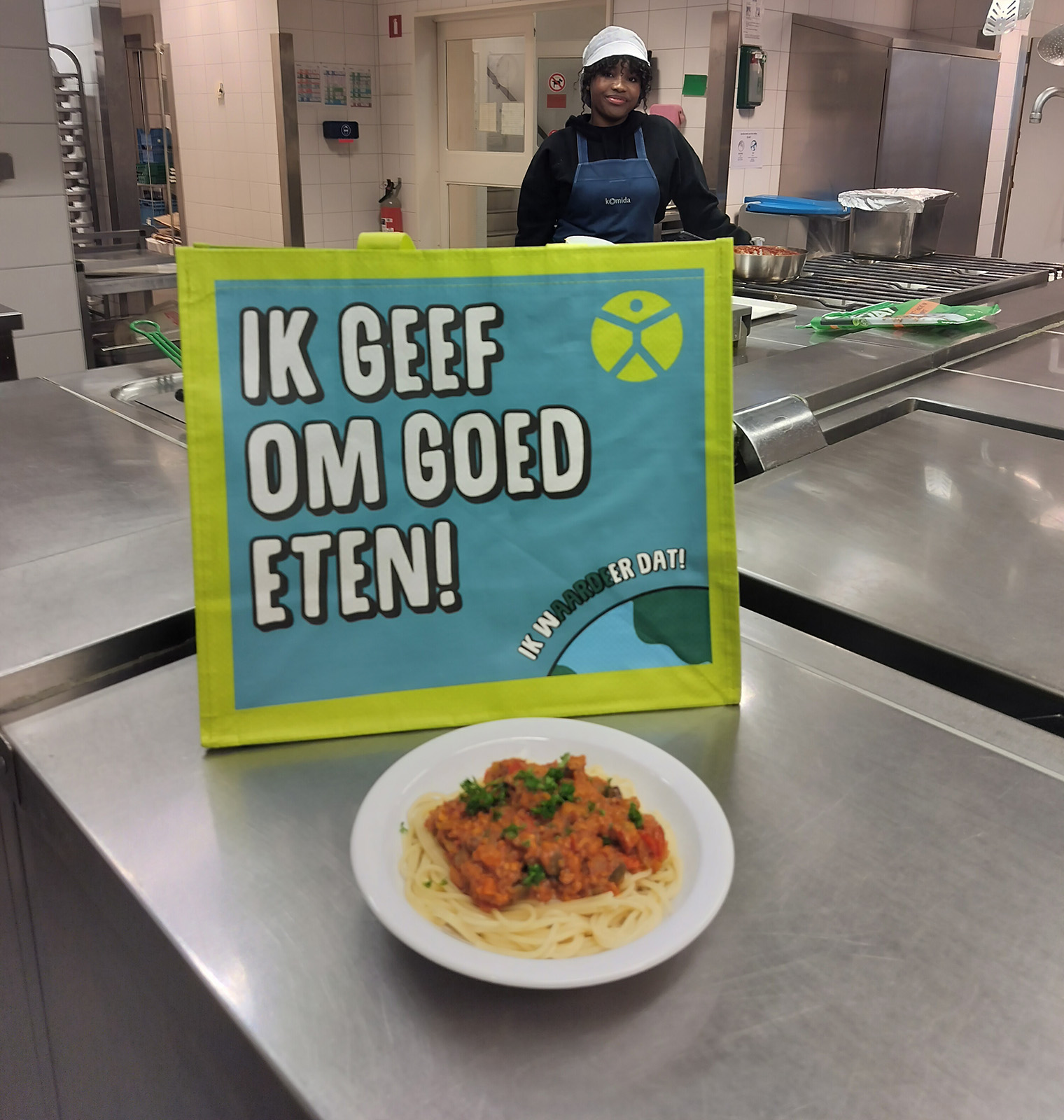
The journey Komida embarked on ten years ago was made possible thanks to collaboration with Rikolto and internal policy decisions at the University of Antwerp. By providing space for experimentation and setting clear sustainability goals, Komida was able to invest in systems that require time and support. Events such as the USOS Fair Trade Breakfast have also been strengthened by Komida in the past, ensuring that sustainable choices remain visible and accessible within the university. This creates an interplay in which policy stimulates sustainable initiatives, and Komida translates that vision into daily reality on campus.
--------
This article is an English translation of the original piece written in Dutch by Aissatou Diallo, Communications Intern at Rikolto. You can read the original version here: Studentenrestaurant komida: waar lekker en duurzaam synoniemen zijn

.png)
.jpg)

.jpg)