Rice feeds billions, yet those who grow it often live in extreme poverty. In Central and East Java, smallholder rice farmers face a paradox: global demand for rice is rising, but government-regulated prices keep their incomes stagnant while input costs soar. This project addresses this injustice by supporting rice farming communities to adopt Sustainable Rice Platform (SRP) practices—proven methods that increase yields, reduce water use by 20%, and cut greenhouse gas emissions by 50%. By building farmer organisation capacity and advocating for government recognition of SRP-certified rice as 'specialty rice', we're enabling farmers to secure premium prices and better livelihoods while producing healthy, climate-smart rice for Indonesia's future.
Indonesia's rice farmers are trapped in a system that works against them. Government-regulated minimum prices remain fixed at just USD 0.33/kg, while consumer prices have jumped from USD 0.60 to USD 0.95/kg in six months due to inflation and climate shocks. Meanwhile, the commonly promoted irrigated production system demands expensive chemical inputs that drain farmers' budgets without guaranteeing better yields.
Policy contradictions compound the problem: despite promoting self-sufficiency, Indonesia now imports rice. This has created government resistance to internationally certified standards like SRP, based on unfounded fears that certified rice targets only export markets—ignoring huge domestic demand from restaurants, hotels, and conscious consumers.
Tenant farmers and casual laborers face even harsher conditions with minimal wages and no voice. Without organized farmer groups and support for sustainable alternatives, the knowledge gap persists—leaving farmers vulnerable to climate change while ecosystems degrade.
Strengthening local capacity
We work alongside local partners to strengthen the capacities they identify as most important to their work with farmer organisations. Together, we develop practical tools, skills and approaches that can continue to support farmer organisations beyond the lifetime of the project.
Making sustainable rice production work for farmers and the environment
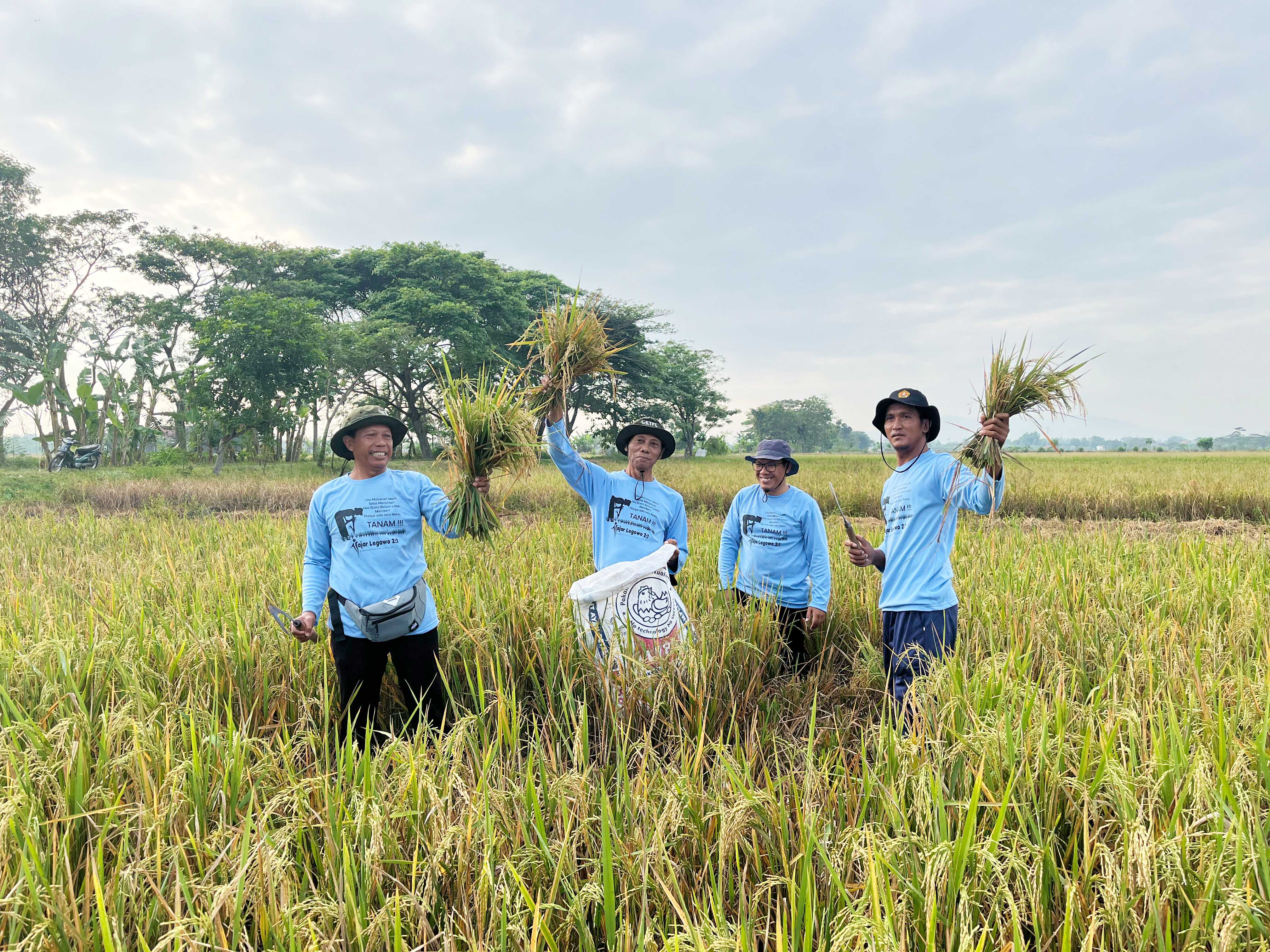
Across five districts, farmers are putting Sustainable Rice Platform (SRP) practices into practice through Farmer Field Schools. These include alternate wetting and drying, integrated pest management and more efficient use of agricultural inputs. Experience from previous phases shows the potential of these practices to reduce chemical fertiliser use by 30% while increasing yields by 20% — around 0.5 tonnes per hectare — without additional labour. Farmers have also seen, on average, a 10% increase in income, a 20% reduction in water use and a 50% reduction in greenhouse gas emissions.
Strengthening farmers’ voice and collective action
Farmer organisations are stronger when farmers can shape the decisions that affect their livelihoods. We therefore support farmer organisations at different levels — from local Farmer Field Schools to district and national federations — to strengthen their organisation, leadership and capacity to advocate for their members. In total, 115 farmers will take part in learning processes on organisational management, visioning, advocacy and participatory monitoring. Particular attention is given to the voices and rights of tenant farmers and casual labourers, who are often left out of policy discussions.
Creating recognition and better market opportunities
For sustainable rice production to deliver lasting benefits, farmers need markets that recognise the value of what they produce. Together with government authorities, agricultural extension services, universities — including IPB Bogor and Aarhus University — and private-sector actors, we are building the case for recognising SRP rice as speciality rice. In Indonesia, speciality rice is not subject to a government price ceiling, giving farmers greater room to negotiate prices that reflect their production costs. We are also connecting farmer organisations directly with buyers looking for sustainable, high-quality rice, helping to create more inclusive and rewarding market relationships.

By June 2027, this project will deliver measurable change:
For farmers:
For farmers organisations:
For markets and policies:
For the environment:
Together, these results lay the foundation for a scalable and replicable model of sustainable rice production that strengthens farmer livelihoods, contributes to healthier and more sustainably produced food for Indonesian consumers, and has the potential to reach up to 500,000 rice farmers through national farmer federation networks.