

The Wassa Amenfi Cocoa Landscape Initiative (WACLI) brings together farmers, companies, and communities in Ghana to build a sustainable, fair, and climate-resilient cocoa sector. Through landscape-level collaboration, it promotes climate-smart agroforestry, income diversification, and responsible sourcing to tackle deforestation, poverty, and climate vulnerability.
Behind every bar of chocolate are farmers, many of whom struggle to make a decent living despite their vital role in the global cocoa supply chain. The Wassa Amenfi West landscape reflects these realities: declining cocoa yields through aging cocoa trees, loss of soil fertility, and diseases as well as soil fertility, aging cocoa trees, and limited access to finance, especially for women and youth, have left smallholder farmers vulnerable. At the same time, deforestation and climate change threaten both livelihoods and the future of cocoa itself.
This project puts people and the planet at the center of cocoa sustainability. It empowers farmers, especially women and youth, to earn more, diversify incomes, and manage their land responsibly. By combining livelihoods, environmental protection, and market access, it offers a new model for inclusive, climate-resilient cocoa production.

The initiative addresses deforestation and poverty linked to cocoa production by creating a responsible sourcing model that fosters both sustainability and multi-stakeholder collaboration in and around Wassa Amenfi.
We adopt an integrated landscape approach, tackling social, environmental, and commercial challenges in the area, while involving all stakeholders operating in that area too. There are 5 main focus areas; Rikolto leads focus area 2.
1 | Farmer empowerment: the partnership will train 5,000 cocoa farmers in cocoa agroforestry and support them to convert 5,000 hectares of cocoa farms into diversified agroforestry farms with multipurpose trees, benefiting soil health and biodiversity.

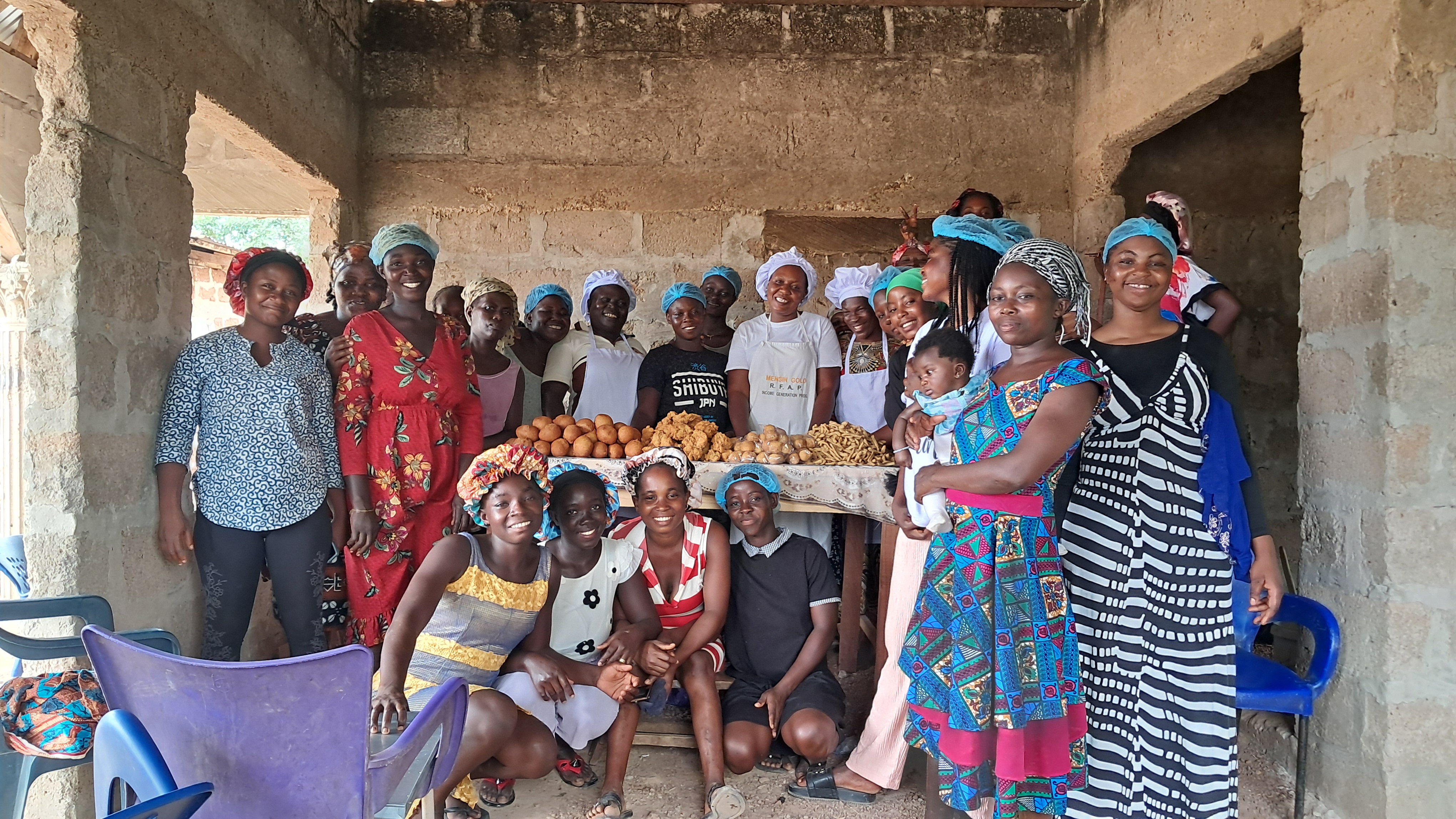
2 | Improved livelihoods: we will establish 50 Village Savings and Loans Associations (VSLAs), with 1,000 direct members, to promote savings, access to credit, and income diversification. Alongside the 1,000 VSLA members, an estimated 4,000 additional household members will be able to make use of this.
“We pay special attention to women’s leadership, ensuring at least 50% of VSLA leaders are women and promoting youth-led agri-businesses such as honey production, labour services, input supply, seedling nurseries, and composting services.”
Alhassan Issahaku
Cocoa programme manager in Ghana | Rikolto
3 | The partnership will establish a multi-stakeholder platform bringing together farmers, companies, researchers, NGOs, the private sector, traditional authority, opinion leaders, media, and government agencies to coordinate action on landscape management and mobilise sustainable investments.
Together with Preferred by Nature (PbN), Rikolto has already brought together 59 members from 27 stakeholder groups, including local authorities, farmer cooperatives, major cocoa buyers such as Ferrero , and traditional leaders, but also researchers, NGOs, media and government agencies. The goal? To jointly coordinate action on landscape management and mobilise sustainable investments. The diversity of participants ensures that decisions and strategies reflect the perspectives of all key actors within the landscape.
"The platform seeks to establish a sustainable cocoa purchasing model, with a deliberate focus on strengthening key stakeholders along the value chain. Central to this approach is the cocoa farmer, widely recognised as the weakest link in the chain due to high vulnerability and susceptibility to exploitation."
Victor Anasara Abugré
Programme officer in Ghana | Rikolto
4 | Research to understand risks, impacts, and opportunities at landscape, farm, and community level. Through the International Institute of Tropical Agriculture (IITA), the project integrates data-driven research to measure progress and guide future investments.
5 | Ferrero develops EUDR compliance protocols and ensure traceability and no-deforestation through farm mapping and the integration of farmers supply chain, to ensure its cocoa sourcing model is aligned with the EUDR regulation and creates positive change through long-term relationships.
By 2027, the project aims to achieve the following results:


.jpg)