

If young people are the future, school meals are one of the foundations for sustaining it. Good nutrition for children in school helps prevent health problems that are common in cities, such as malnutrition and obesity. It also contributes to equity and inclusion, ensuring that new generations have access to an adequate and nutritious diet. At the heart of this initiative, we are striving to support sustainable solutions that improve children’s access to nutritious food, strengthen the local economy, and respect the environment.
In Ecuador, young people face significant challenges when trying to access employment. According to official government statistics, 8.1% of individuals aged 18 to 29 were unemployed nationwide in 2025, while 24.1% held positions for which they were overqualified (INEC, 2025). The same source highlights key barriers to youth employability, including lack of work experience (28.62%) and insufficient job-specific skills required by the labor market (14.49%), contributing to nearly 26% of young people remaining in the informal economy. Furthermore, the Youth Employment Report (Children International, 2025) indicates that 59.8% of young people rely financially on their parents, and 51.1% report having no income at all
"Ideas that Nurture" takes this as its point of entry, building on the lessons learned from the ‘Generation food’ (called Generation ‘A’ in Spanish) project, which supported young people in proposing business ideas to address the main challenges of Quito's food system. This initiative responds to the nutritional needs of young children with the power of youth entrepreneurship and a solidarity-based business model that guarantees access to nutritious food.
.jpg)

Through the 'Ideas that Nurture' project, Rikolto works with young people who are interested in improving access to healthy food for children at school. They do this by testing and refining their innovative projects to help them succeed in the agri-food sector. This benefits society in two ways: it introduces young entrepreneurs to a high-potential market, while improving the food environment in schools and promoting adequate nutrition in the long term.
.jpg)
To make this happen, we focus on a dual approach:
Unlike the pilot initiative (Generación ‘A’), projects in more advanced stages (ongoing businesses) are eligible, provided they fit into one of three categories: 1) Sustainable production of fresh food - primary production, 2) Processing of healthy food for children, 3) Management of canteen / school catering services.
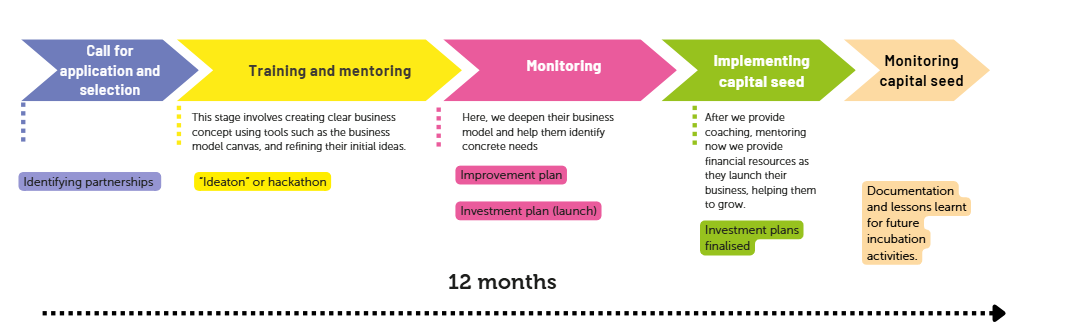
The project targets two cohorts of entrepreneurs who go through a process that monitor their next steps and impact on the school food environment:
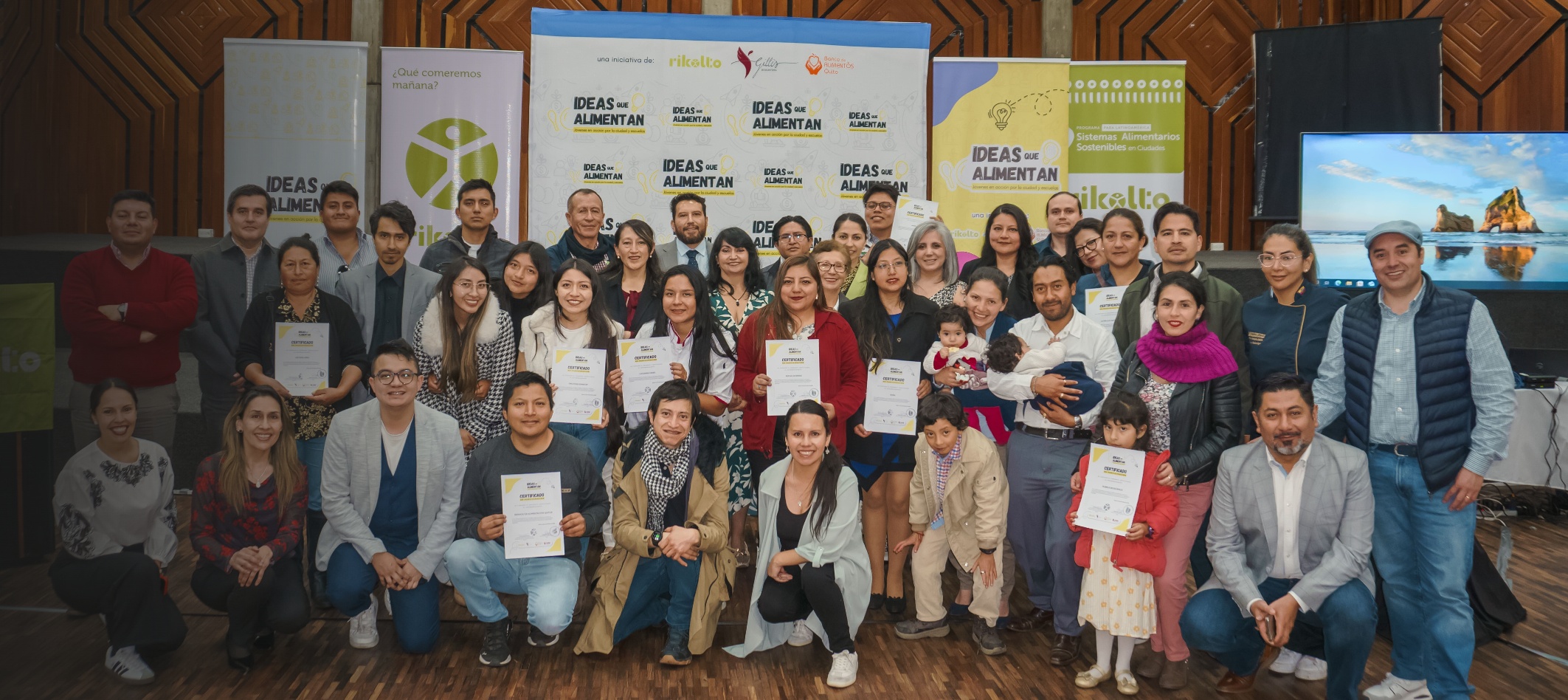
The Ideas that Nurture initiative is supported by the Gillès Foundation and implemented by Rikolto and the Quito Food Bank, in collaboration with the Universidad Internacional del Ecuador (UIDE) and ConQuito, Quito’s Economic Promotion Corporation. The Municipal Secretariat of Education, Recreation and Sports of the Metropolitan District of Quito, the National Federation of School Kiosks of Ecuador, the Institute of Popular and Solidarity Economy (IEPS), CONEXIÓN for Sustainable Development, as well as experts and academics, also contribute to improving access to healthy food for schoolchildren.






.png)
.jpg)
.jpg)